Which Brands Are Certified or Independently Verified for Sustainability?
Where to check if a brand is certified or independently verified for sustainability: the public directories, what each one proves and what it does not.
By Zintora Team
Brands that are certified or independently verified for sustainability are the ones listed in a public directory run by the standard owner: the B Corp directory, the Fair Wear brand list, the bluesign system partner list, the Textile Exchange certified company search or the World Fair Trade Organization directory. A logo alone is not proof.
That is the short answer. The longer one matters because each directory verifies something different. A company can be a certified B Corp and still sell a T-shirt with no certified fibre in it. A brand can work with Fair Wear on factory conditions and buy conventional cotton. This guide explains where to look, what each listing proves, and how to turn a listing into evidence you can file with a purchase.
We do not name brands as certified in this article. Listings change, certificates expire and companies leave schemes, so any list we printed today could be wrong next month. The method below lets you check any brand yourself, on the day you buy.
Certified, verified or self-declared: three different things
Before opening a directory, separate three kinds of claim:
- Certified: an accredited or approved body has audited the company, site or product against a published standard and issued a certificate with a number, a scope and an expiry date.
- Independently verified: a third party has checked a claim or a performance level, but the result may be a membership, a score or a published report rather than a certificate.
- Self-declared: the company says it, with no outside check. This includes most uses of "eco", "green" and "responsible".
The UK Competition and Markets Authority's Green Claims Code expects environmental claims to be truthful, clear and backed by evidence. That is a good reason to buy from brands whose claims sit in the first two groups, and to keep the evidence.
The public directories, and what each one verifies
| Directory | Run by | What a listing verifies | What it does not verify |
|---|---|---|---|
| Find a B Corp | B Lab | The whole company's social, environmental and governance performance against the B Lab Standards | That any single product is made from certified materials |
| Brands we work with | Fair Wear | Membership and published Brand Performance Check reports on labour due diligence | Fibre content, chemistry or environmental impact of a garment |
| bluesign system partners | bluesign | That a company currently applies bluesign criteria within its processes | That every product from that partner meets the criteria |
| Find a certified company | Textile Exchange | Scope certificates for recycled, organic and animal fibre standards (GRS, RCS, OCS, Responsible Wool, Down, Mohair and Alpaca) | Anything outside the certified sites and products named in the scope |
| WFTO Certified Enterprises | World Fair Trade Organization | The whole enterprise against the 10 Principles of Fair Trade | Individual products sold by others under different brands |
| Fairtrade products | Fairtrade | Products carrying the Fairtrade Mark under Fairtrade Standards | Factories or brands outside the certified supply chain |
B Corp: a company-level verification
B Lab UK describes B Corp Certification as assessing and verifying a company's social, environmental and governance impact against the B Lab Standards. Since 2025 all submissions, first time or recertifying, are made against the new version of those standards. The directory lets you search by company name, country and industry.
What a listing tells you: the company as a whole has met the standards at its last certification. What it does not tell you: whether the hoodie you are about to brand is organic, recycled or made in an audited factory. Treat B Corp as a signal about the supplier, then ask for product evidence separately.
Fair Wear: labour due diligence, not a product label
Fair Wear calls itself a multi-stakeholder initiative for human rights and environmental due diligence. Member brands commit to its Code of Labour Practices, which contains eight labour standards, and Fair Wear publishes a Brand Performance Check for members that scores how far due diligence is built into their buying practices. There is no Fair Wear certificate on a product. The useful document is the published Brand Performance Check for the brand you are considering, which you can open from the brand list.
bluesign: chemistry and resources in textile production
bluesign lists more than 900 system partners, searchable by name, country and sector (brands and retailers, chemical suppliers, manufacturers, converters and technology providers). The site states plainly that partnership means a company applies bluesign criteria to what goes into its products and processes, and that products are assessed separately. So a brand listed as a partner is not proof that a particular jacket or bag fabric is bluesign approved. Ask which material is.
Textile Exchange: scope certificates for fibres and materials
The Textile Exchange search brings together certified companies, materials and products for its standards, including the GRS, the Recycled Claim Standard, the Organic Content Standard and its animal fibre standards. A search result points to a scope certificate, which names the certified sites, the product categories and the materials covered. Each shipment can then be backed by a transaction certificate. Our guide to eco-friendly merchandise certifications covers more of the labels you will meet on product sheets.
World Fair Trade Organization: the whole enterprise
The WFTO says its system assesses the entirety of a business, not just a specific product, against the 10 Principles of Fair Trade. Certified Fair Trade Enterprises may use the WFTO label on products sold under their own brand. WFTO also notes it is moving from its Guarantee System to a third-party certification scheme, so check the current status on its directory.
Fairtrade: the product mark
The Fairtrade Mark is a product label. It shows that the certified ingredient or fibre (for textiles, usually cotton) was bought on Fairtrade terms. Look for it on the product and use Fairtrade's own pages to understand what the mark covers.
How to check a brand in five minutes
- Write down exactly what the brand claims: "B Corp", "bluesign partner", "recycled", "fair trade".
- Open the matching directory from the table above. Search the legal company name as well as the trading name.
- Note the status, the date and, where there is one, the certificate number and its expiry.
- Compare the scope with what you are buying. A site certificate for a dyehouse does not cover a backpack sewn somewhere else.
- Save a dated screenshot or PDF with your purchase records.
If the brand is not in the directory, ask it why. A good answer names the certification body and gives a certificate number you can check. "Our supplier is certified" with no name or number is not an answer.
Turning a listing into evidence for a merchandise order
For branded merchandise, the brand on the label is often not the company you buy from. Your supplier decorates a blank garment or bag made by someone else. That changes the question from "is this brand verified?" to "is this item, in this batch, covered?".
Ask for three things with your quote:
- the material composition of each item, with percentages
- the certificate that applies to that item, if there is one, with its number and scope
- for certified recycled or organic fibre, the transaction certificate for your order once it has shipped
Our sibling guide on how to verify sustainable branded merchandise shows how to write those requests into a brief.
Where Zintora fits
Zintora is a quote-only B2B supplier of branded merchandise. We do not hold a company certification, and we do not present ourselves as a certified brand. The only certificate we name is the GRS of The Tenth House, checked per lot; certificates for other products are available on request. For the products we sell, we state the composition we can document and send supplier certificates on request.
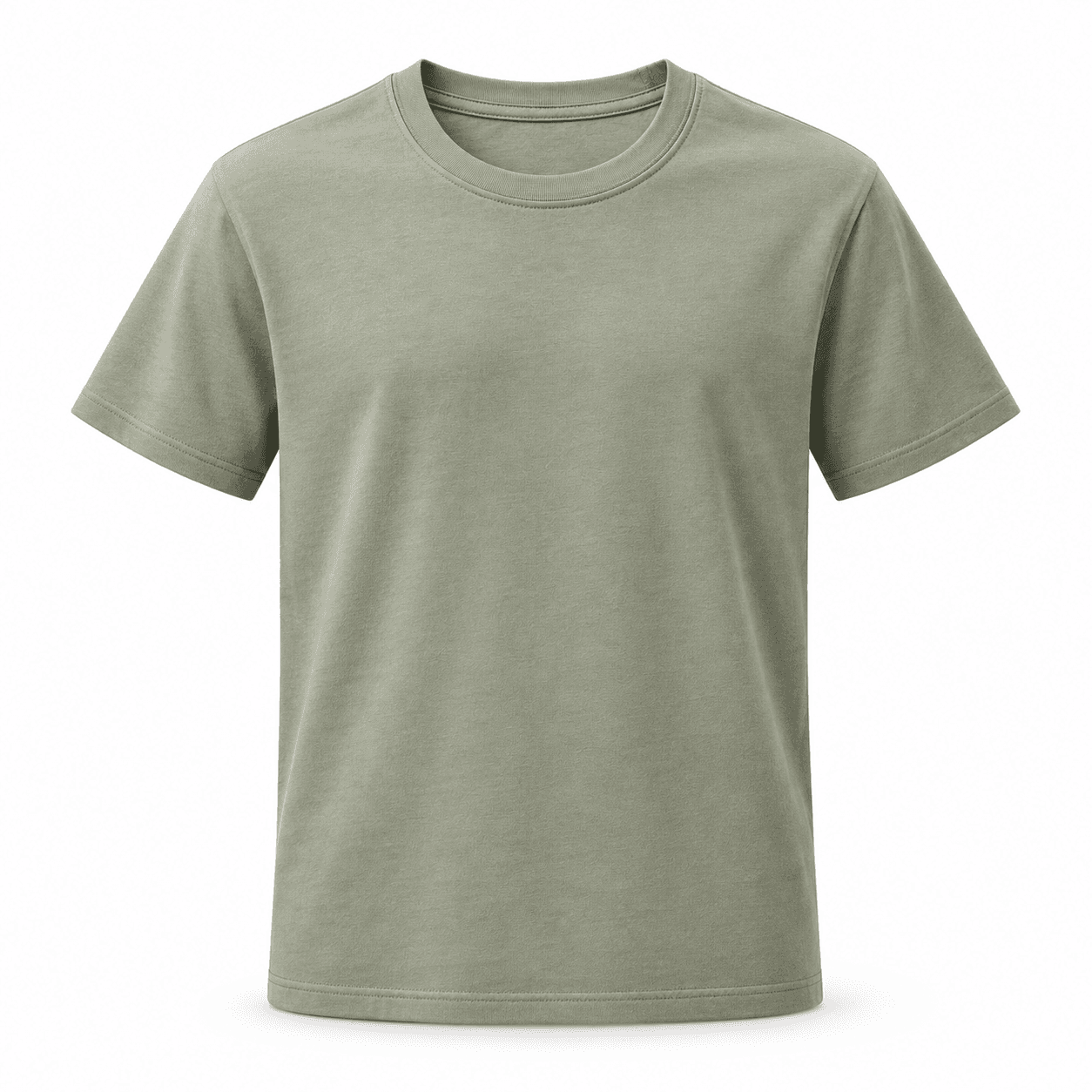
For textiles where the composition matters, the Sustainable T-Shirt is a good example of how we handle it: its product page says the composition and any accreditation are confirmed before production, and that the product sheet alone does not certify any scheme. The minimum order is 25 units. You can browse the rest of the range on our sustainable branded merchandise page or across the full catalogue, and see our custom T-shirts for everyday wear.
Our sustainability page explains the data we provide: every quote states an estimated carbon footprint per product, and for the merchandise you buy from us we prepare a sustainability report with Scope 3 emissions data. We do not buy carbon credits or offset emissions. The certificates we cite are listed on our trust page.
Pricing is confirmed in your quote, ex VAT; printing and delivery are extra, UK import VAT and duties are paid on delivery. Production takes 10 to 20 working days after proof approval, confirmed in the quote. You approve a digital proof before anything is produced.
Brand verification checklist
- Claim written down word for word, with the page it came from
- Matching directory opened on the standard owner's own website
- Legal name and trading name both searched
- Status, date, certificate number and expiry recorded
- Scope compared with the exact product, material and site you are buying
- Product-level evidence requested for company-level listings (B Corp, Fair Wear, bluesign partner)
- Transaction certificate requested for certified recycled or organic fibre
- Dated screenshot or PDF saved with the purchase order
- Wording in your own communications limited to what the evidence supports
Frequently asked questions
What brands are certified or independently verified for sustainability?
The ones you can find, with a current status, in the standard owner's directory: B Corp for whole companies, Fair Wear for labour due diligence, bluesign for textile chemistry, Textile Exchange for fibre content, WFTO for fair trade enterprises and Fairtrade for marked products. Search the brand on the day you buy.
Is a B Corp brand's whole range sustainable?
Not necessarily. B Corp certifies the company's overall performance against B Lab's standards. It does not certify each product's materials, so ask for product-level evidence too.
Does a bluesign partner logo mean the product is bluesign approved?
No. bluesign states that partnership means applying its criteria to products and processes, and that products are assessed separately. Ask which material or product is approved.
How often should I recheck a certified brand?
Before each significant order. Certificates have expiry dates and listings change when companies leave or join a scheme.
Can Zintora send certificates with a quote?
The only certificate we name is the GRS of The Tenth House, checked per lot; certificates for other products are available on request. Ask in your quote request for the documents you need, and we tell you what is available for each product.