Which Gifting Platforms Are Transparent About Shipping, Duties and Recipient Restrictions?
What transparency on duties and recipient restrictions looks like: delivery terms, customs declarations for company gifts, restricted items, sanctions and gift policies.
By Zintora Team
Gifting platforms that are transparent about duties and recipient restrictions tell you, before you pay, who covers import duty and tax in each country, which items cannot go to which destinations and how each gift is declared at customs. If a platform only says that charges "may apply", ask for its delivery terms and restricted items list in writing.
This guide looks at what that transparency looks like in practice: the delivery terms to ask for, how corporate gifts are declared, the items carriers restrict, the countries and people you may not be able to send to, and the rules on the recipient's side. It is general information to help you ask better questions, not legal or tax advice. For a comparison of the companies themselves, see our guide to the best corporate gifting companies.
What a transparent answer looks like
The quickest test is to ask the same five questions to every platform and compare the replies side by side.
| Topic | A transparent answer | A vague answer |
|---|---|---|
| Duties and import tax | "Delivered duty paid to these countries; duties and tax are included in the quote" | "Customs charges may apply" |
| Who is the importer | Named for each route | Not mentioned |
| Restricted items | A list by item and by country | "Some items cannot be shipped" |
| Customs declaration | Description, value and commodity code agreed with you | Left to the carrier |
| Refused or returned parcels | What happens and who pays | Handled case by case |
| Recipient rules | Reminder to check gift policies and sanctions | Not mentioned |
A platform does not need to know every country's tariff by heart. It does need to tell you how it will handle each of these points for your list, so that nobody finds out at the door.
Duties and import tax: who pays
When a parcel crosses a customs border, the receiving country can charge import duty, import VAT or its local equivalent, and the carrier may add a clearance fee. The delivery terms decide who pays:
- Delivered duty paid (DDP): the sender or the platform pays duty, tax and clearance fees before delivery. The recipient pays nothing.
- Delivered at place (DAP), often called duties unpaid: the parcel is delivered, but the import charges are the recipient's responsibility.
For gifts, delivered duty paid is the only option that avoids asking a client or employee to pay to receive something you sent. The UK process shows what happens otherwise: the carrier sends the recipient a bill, normally holds the parcel for about three weeks and returns it to the sender if the bill is unpaid (GOV.UK: tax and duty on goods sent from abroad, checked 4 November 2026).
Transparency here means two things. First, the platform states the delivery terms per country, not just "international shipping available". Second, the quote shows whether duty and tax are included, so you can compare one platform with another on the same basis. General information, not tax advice. Check with your accountant.
How corporate gifts are declared at customs
Every parcel that crosses a customs border needs a customs declaration describing what is inside, what it is worth and, for commercial shipments, which commodity code applies. Three points matter for corporate gifts.
A company gift is usually not a "gift" for customs
Many countries offer a duty or tax allowance for gifts, but it usually applies to private individuals. GOV.UK says that, to qualify as gifts, goods sent to the UK must be "bought and sent between individuals (not companies)" (GOV.UK: gifts sent from abroad, checked 4 November 2026). A branded gift sent by a business is normally declared as a commercial shipment. A platform that suggests marking corporate gifts as personal gifts to avoid charges is giving you a risk, not a saving.
Description and value must be accurate
"Gift" or "merchandise" is not a description. Customs expect something like "stainless steel drinking bottle, printed" or "cotton hooded sweatshirt". The value should be the real value of the goods. Under-declaring can delay a parcel or lead to penalties for whoever is responsible for the import.
Commodity codes decide the duty rate
The commodity code, sometimes called the HS code, identifies the type of goods and sets the duty rate in the receiving country. GOV.UK explains how to find commodity codes for imports or exports. A transparent platform either confirms the codes it uses for your items or asks you to agree them. For goods sent by post, HMRC's Notice 143 for international post users sets out the UK rules on declarations.
Restricted items: what carriers will not take
Shipping restrictions come from two places: the carriers and airlines, and the destination country. Common problem items in corporate gifting include:
- Lithium batteries, including power banks, wireless chargers with built-in batteries, speakers and other electronics. Carriers treat many of these as dangerous goods for air transport, with limits or special handling, and some routes refuse them.
- Liquids, aerosols and fragrances, such as perfumes, hand sanitiser and some cosmetics, which may be flammable or restricted on air routes.
- Food and drink, which most destinations control through separate rules. Zintora does not supply food or drink.
- Blades and tools, including multi-tools and some knives, which are restricted in many countries.
- Items made from certain materials, such as some woods or animal products, which can need extra paperwork in some countries.
The safest international gifts are simple: notebooks, pens, empty drinking bottles, mugs, bags and clothing. For example, a branded steel bottle sent empty is far easier to ship than an electronic gadget. Our branded water bottles page shows the bottles we can brand.
Carriers publish their own prohibited and restricted items lists, and those lists change, so ask the platform which carrier it uses for each route and check the item against that carrier's list.
Country restrictions and sanctions
Some destinations are restricted by law rather than by carriers. The UK, like other countries, applies sanctions that can restrict trade with certain countries, regions, organisations and people. GOV.UK's UK sanctions page explains that the Department for Business and Trade leads on trade sanctions, with the Office of Trade Sanctions Implementation handling licences and suspected breaches for certain trade sanctions (checked 4 November 2026).
In practice, a transparent platform tells you which destinations it does not serve and why. If your recipient list includes a country under sanctions, take advice before sending anything, even a small branded gift. This is general information, not legal advice.
Recipient restrictions on the receiving side
Restrictions are not only about borders. Many recipients work under rules that limit what they can accept:
- Gift and hospitality policies. Public sector bodies, regulated industries and many large companies set limits on gifts their staff can accept, or require gifts to be declared.
- Anti-bribery rules. In the UK, the Bribery Act 2010 applies to business gifts and hospitality; the government publishes guidance on the Bribery Act 2010. Modest, branded, clearly business-related gifts sent openly are the usual approach.
- Personal data. Sending to home addresses means handling personal data. Collect only what delivery needs, keep it secure and agree with the platform how long it is kept.
A platform cannot check your client's gift policy for you, but a good one reminds you to ask, and makes it easy to send a modest, clearly branded item rather than something that looks like a personal present.
How Zintora handles duties and restrictions
Zintora delivers across the UK and internationally to Europe, the Middle East and Africa, Asia-Pacific and the Americas. We make branded merchandise to order and quote each project with its destinations, so delivery terms are set out before you approve anything. If an item in your selection is restricted for a route, we tell you and suggest an alternative that travels more easily.
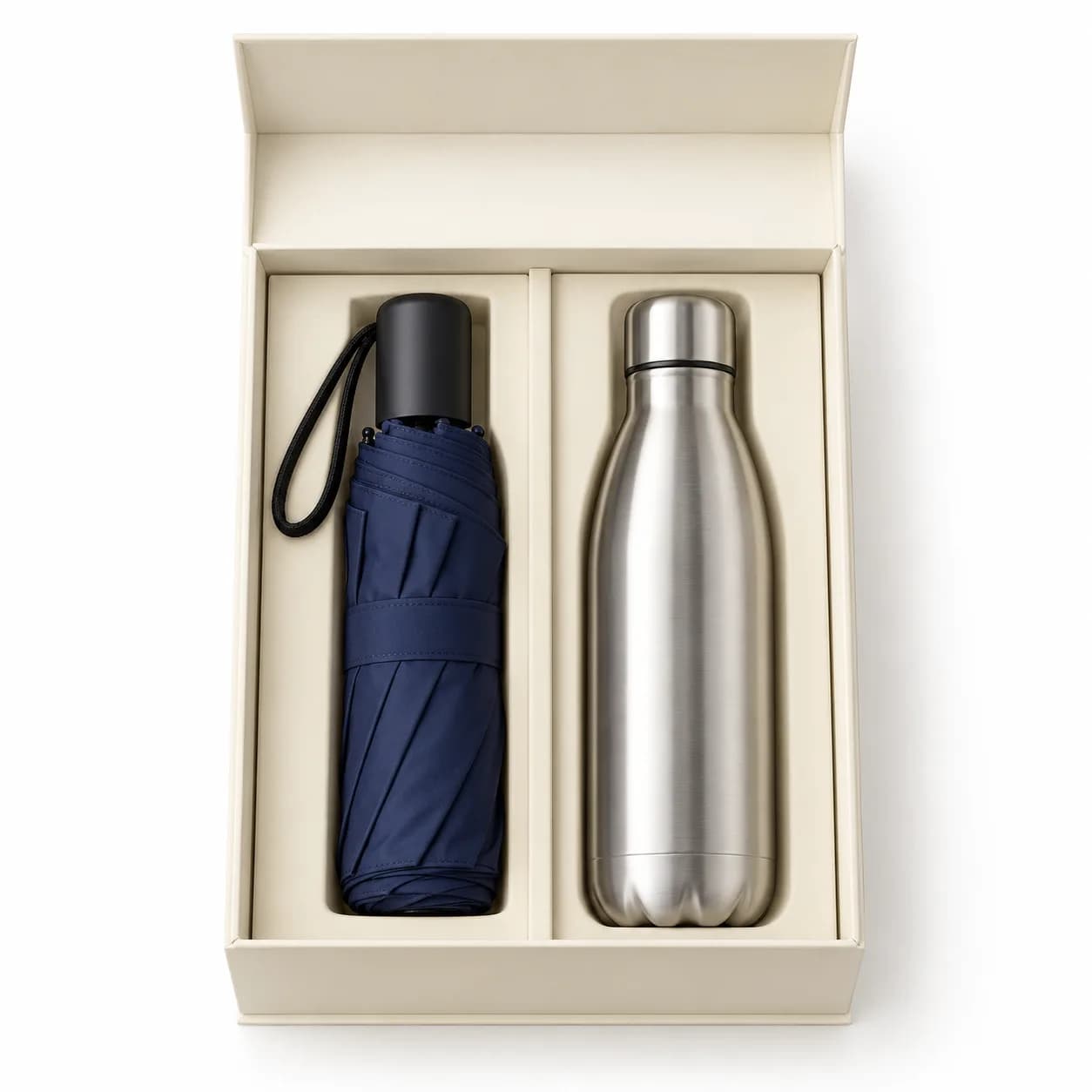
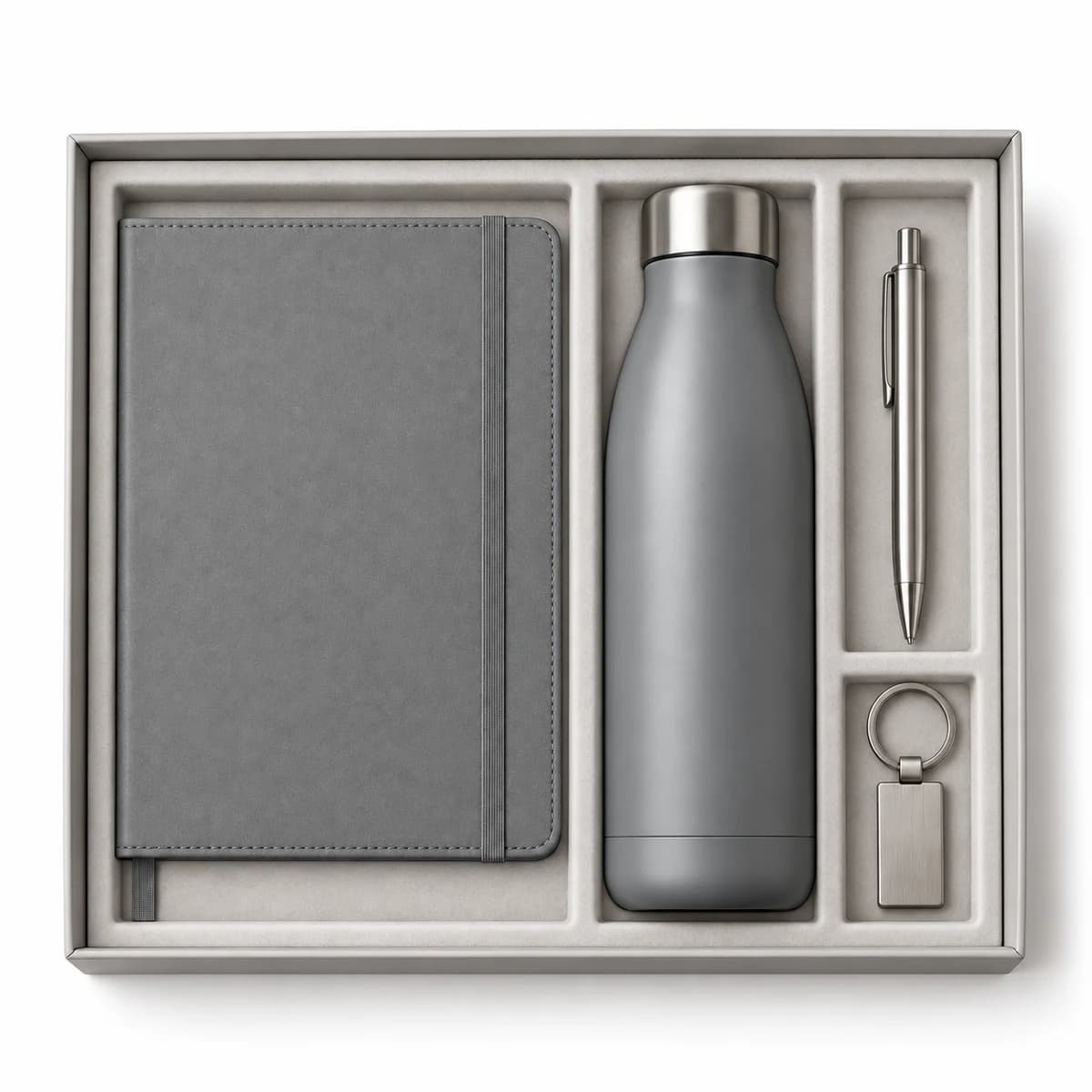
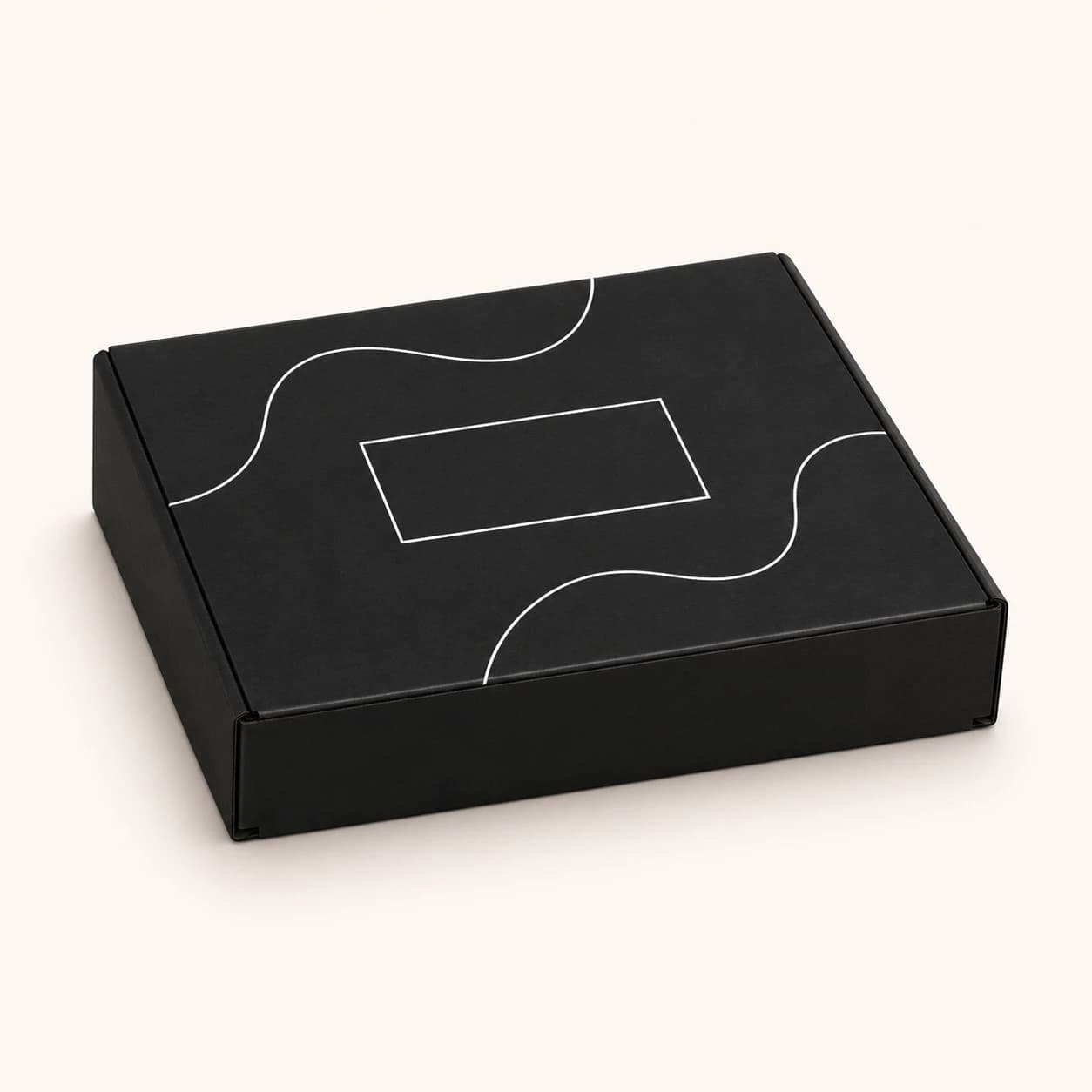
Simple items tend to travel best. The Umbrella and bottle duo and the Grey four-piece welcome pack both start at a minimum of 1 pack, and the Printed Kraft Box starts at 50 units. You approve a digital proof before production. Production takes 10 to 20 working days after proof approval, confirmed in the quote. Pricing is confirmed in your quote, ex VAT; printing and delivery are extra, UK import VAT and duties are paid on delivery. For deliveries outside the UK, the quote states how charges in the destination country are handled.
For ready-made gift sets, see our corporate gifts page, or browse the full catalogue.
Duties and recipient restrictions checklist
- Delivery terms confirmed for every destination: delivered duty paid or not
- Duty, import tax and clearance fees shown in the quote where included
- Importer for each route named
- Goods declared with an accurate description, value and commodity code
- No corporate gift marked as a personal gift to avoid charges
- Items with batteries, liquids, aerosols or blades checked against the carrier's list
- Destinations checked against UK sanctions guidance
- Recipients' gift and hospitality policies considered
- Home addresses collected and stored securely
- Plan agreed for parcels refused or returned
Frequently asked questions
What does delivered duty paid mean for a gift?
The sender, or the platform for them, pays the import duty, tax and clearance fees, so the recipient receives the gift without a bill. It is the delivery term to ask for whenever a gift crosses a customs border.
Can I send power banks as international gifts?
Often with difficulty. Power banks contain lithium batteries, which carriers treat as dangerous goods on air routes, with limits or refusals depending on the route. Choose items without batteries for international lists.
Do I need a customs declaration for a corporate gift?
Yes, for any parcel that crosses a customs border. It should describe the goods accurately, state their real value and, for commercial shipments, give a commodity code.
Who checks whether a country is under sanctions?
The sender is responsible for complying with sanctions. GOV.UK's UK sanctions guidance is the starting point, and a transparent platform will tell you which destinations it does not serve.
Can a client refuse a corporate gift?
Yes. Many organisations limit the gifts their staff may accept. Keep gifts modest and clearly branded, and check with your contact if you are unsure.
Get a clear quote
Send us your destinations, the number of recipients in each and the items you have in mind, and the quote will set out the delivery terms for each route. Request a quote or start with the catalogue.