Which Corporate Gift Vendors Handle Delivery Problems Well?
How good corporate gift vendors deal with delivery problems: failed deliveries, wrong addresses, damaged items and missed dates, and the questions to ask before you order.
By Zintora Team
Corporate gift vendors handle delivery problems well when they check addresses before dispatch, give you tracking for every parcel, protect the goods in proper packaging and state in writing who pays to re-send a failed, lost or damaged delivery. Ask for that policy before you order: how a vendor plans for delivery problems matters more than its promises.
Most gifting problems are not about the gift. They happen between the warehouse and the recipient: a new starter who moved last month, a client office that closes for the holidays, a box crushed in transit, a parcel held at customs. This guide covers the four delivery problems that cause most of the trouble, what a good vendor does about each and the questions that reveal how a vendor will behave when something goes wrong. For a comparison of the companies themselves, see our guide to the best corporate gifting companies.
The four delivery problems, side by side
| Problem | Usual cause | What a good vendor does | What to ask before ordering |
|---|---|---|---|
| Failed delivery | Nobody in, office closed, parcel held for a charge | Tracks every parcel, tells you when one is stuck | What happens after a failed attempt, and who pays to re-send? |
| Wrong address | Old CRM data, missing flat number, wrong postcode | Checks the address list before dispatch | Do you check addresses, and can recipients confirm their own? |
| Damaged items | Weak packaging, fragile items, rough handling | Packs for the journey, asks for photos on arrival | How do I report damage, and do you replace or refund? |
| Missed date | Late approvals, production delays, transit or customs | Plans backwards from the date and flags risks early | What do you need from me, and by when, to hit this date? |
Failed deliveries
A failed delivery means the carrier reached the address but could not hand the parcel over. The usual reasons are simple: nobody at home, a reception that does not sign for parcels, an office closed for a bank holiday or a parcel waiting for an import charge to be paid.
What happens next depends on the carrier. Some try again, some leave a card or take the parcel to a local collection point, and some return it to the sender after a set time. For parcels coming into the UK with charges due, GOV.UK says the carrier normally holds the parcel for about three weeks and returns it to the sender if the bill is not paid (GOV.UK: tax and duty on goods sent from abroad, checked 4 November 2026).
A vendor that handles failed deliveries well:
- Shares tracking for every parcel, so you can see which ones are stuck, not just which were sent.
- Tells you what the carrier will do after a failed attempt on each route.
- Ships international gifts delivered duty paid, so no recipient is asked to pay before delivery.
- States who pays to re-send a returned parcel, and on what conditions.
You can prevent many failures yourself. Send gifts when people are actually there: avoid school holidays and office closures, and warn recipients that a parcel is on its way.
Wrong and incomplete addresses
Address problems are the most avoidable delivery problem, and the one vendors most often push back to the customer. The source is usually old data: a CRM entry from three years ago, an office that has moved, a home address for someone who has relocated.
Good practice looks like this:
- Collect addresses from the recipients themselves, close to the send date, rather than exporting them from a contact list.
- Ask for a phone number. Many carriers need one for delivery, especially internationally.
- Use each country's address format. A missing postcode, flat number or district can stop a parcel in some countries.
- Let the vendor check the list for gaps and obvious errors before anything is packed.
- Freeze the list at an agreed point, and agree how late changes are handled.
Home addresses are personal data. Collect only what delivery needs, share it with the vendor securely and agree how long it is kept.
Damaged items
Damage usually comes down to packaging. Branded presentation boxes are designed to look good, not always to survive a courier network on their own. Mugs, glass bottles and anything with a sharp corner need protection inside and an outer box strong enough for the journey.
A vendor that handles damage well asks recipients, or you, to photograph the damage and the packaging on arrival, and then explains how replacement or refund works. Ask whether there is a time limit for reporting damage, because carriers often have one.
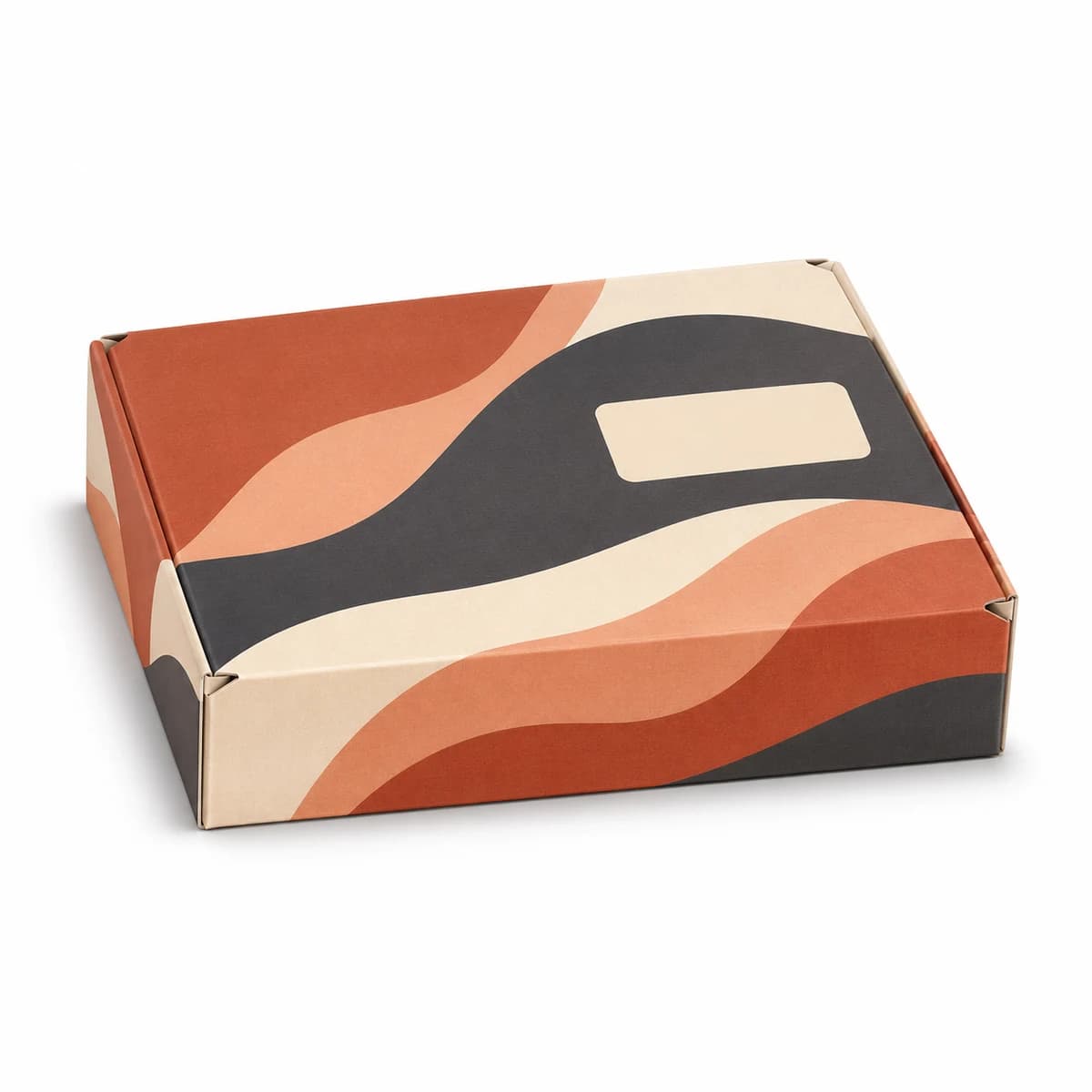
For corporate kits sent by courier, a sturdy branded shipping box does both jobs: it carries your identity and protects the contents. The Shipping Box with Logo and the Full-print shipping box are designed for sending kits, each with a minimum of 50 units. Our branded gift boxes page shows the other box options.

Missed dates
A gift that arrives after the event, the start date or the holidays loses most of its point. Missed dates rarely come from one big failure; they come from small delays stacking up: a late logo file, a proof approved a week after it was sent, an address list that arrived after production finished, a customs check on an international route.
A vendor handles dates well when it works backwards from your date and tells you what it needs from you and when: artwork, approval, quantities, addresses. Be cautious of firm delivery guarantees on international routes; customs and carriers are outside any vendor's control. A realistic plan with the risks named is more useful than a promise.
At Zintora, you approve a digital proof before production. Production takes 10 to 20 working days after proof approval, confirmed in the quote. Transit time depends on the destination, and we set out the delivery plan in the quote rather than promise a date we do not control.
Office or home delivery?
Delivering to one office is simpler: one address, one parcel or pallet, and someone on site to sign. Delivering to each person's home reaches remote workers and clients directly but multiplies the number of addresses, and with it the chance of a problem. For a mixed list, a common approach is to send bulk to offices where people are present, and individual parcels only to those who work remotely.
What to ask a vendor before you order
- Do you check the address list before dispatch?
- Will I get tracking for every parcel?
- What happens after a failed delivery attempt on each route?
- Are international parcels sent delivered duty paid?
- How are fragile items packed?
- How do recipients report damage, and is there a time limit?
- Who pays to re-send a returned or damaged parcel?
- Who is my contact if something goes wrong?
Ask for the answers in writing. A vendor that puts its delivery policy in the quote is easier to hold to it.
How Zintora approaches delivery
We deliver to the office or to each person's home. Zintora delivers across the UK and internationally to Europe, the Middle East and Africa, Asia-Pacific and the Americas. Each quote sets out the delivery plan for the destinations on your list, and the address list is agreed with you before dispatch. You approve a digital proof before production, so the branding is settled before anything is made. Pricing is confirmed in your quote, ex VAT; printing and delivery are extra, UK import VAT and duties are paid on delivery.
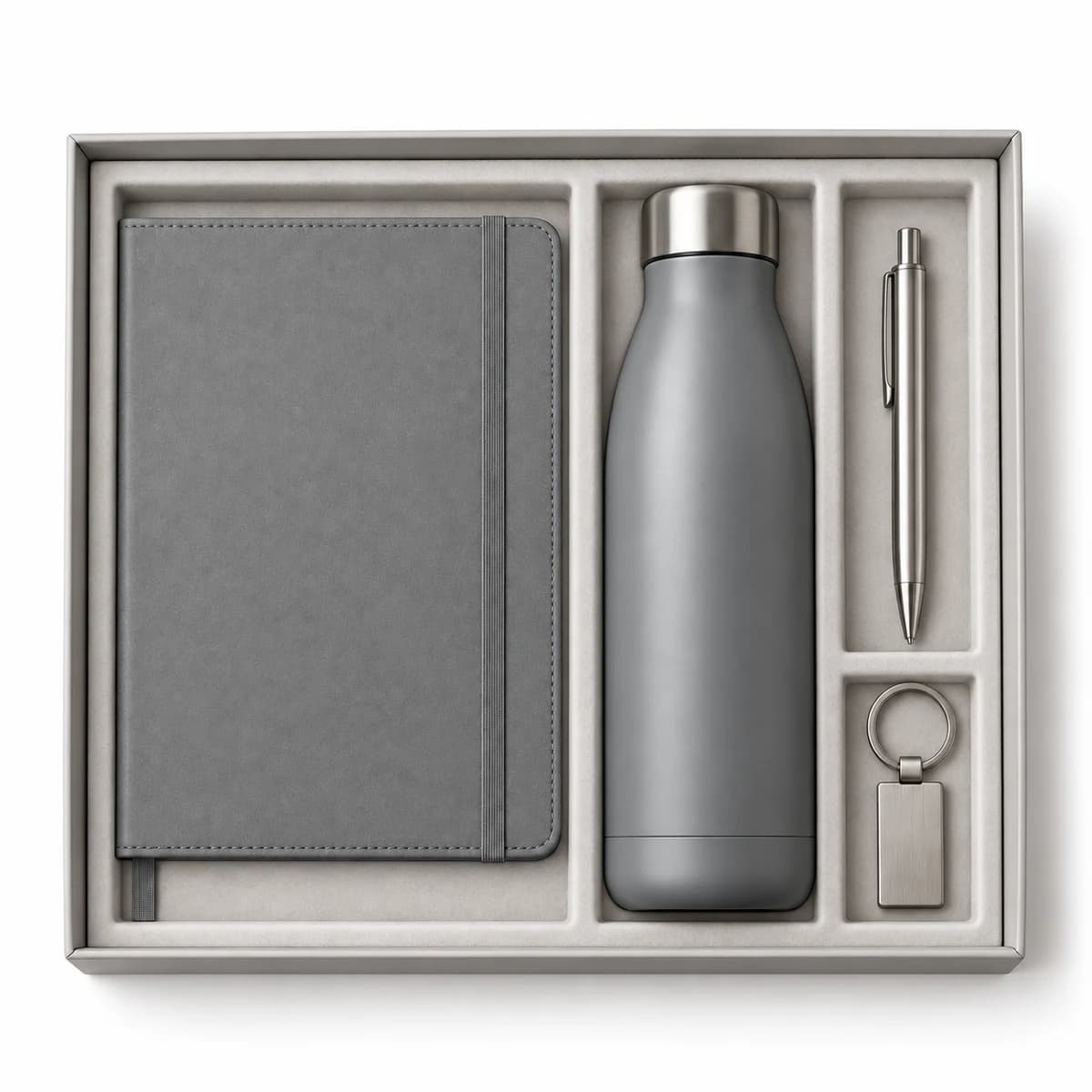
For ready-made sets that travel well, such as the Grey four-piece welcome pack with a minimum of 1 pack, see our corporate gifts page or the full catalogue.
Delivery problems checklist
- Addresses collected from recipients, close to the send date
- Phone number included for every recipient
- Address list checked by the vendor before dispatch
- Tracking agreed for every parcel
- International parcels sent delivered duty paid
- Packaging suitable for courier transit, especially for fragile items
- Damage reporting process and time limit known
- Re-send and refund terms in writing
- Holidays and office closures avoided
- Plan built backwards from the date, with approvals on time
Frequently asked questions
Who pays if a corporate gift is delivered to the wrong address?
It depends on whose error it was and on the vendor's terms. If the address on your list was wrong, many vendors charge to re-send. Ask for the policy in writing before you order.
What should a recipient do if a gift arrives damaged?
Photograph the item and the packaging before throwing anything away, and report it to the sender quickly. The sender then passes the details to the vendor, who explains whether it will replace or refund.
How can I reduce failed deliveries?
Collect addresses directly from recipients, include a phone number, avoid sending during holidays and office closures, and ship international parcels delivered duty paid so nobody is asked to pay at the door.
Can a vendor guarantee a delivery date?
A vendor can plan for a date, but carriers and customs are outside its control, especially internationally. Look for a realistic plan with the risks named rather than a guarantee.
Is it better to send gifts to offices or homes?
Offices are simpler and have fewer failures; homes reach remote staff directly. Many companies combine the two.
Plan a delivery that works
Send us your recipient list, destinations and date, and the quote will set out the delivery plan. Request a quote or start with the catalogue.