Screen Printed Tote Bags: Artwork, Fabric and Ordering Guide
Screen printed tote bags explained: how the process works, artwork rules for ink count and solid colours, cotton and canvas bag choices with UK prices ex VAT.
By Zintora Team
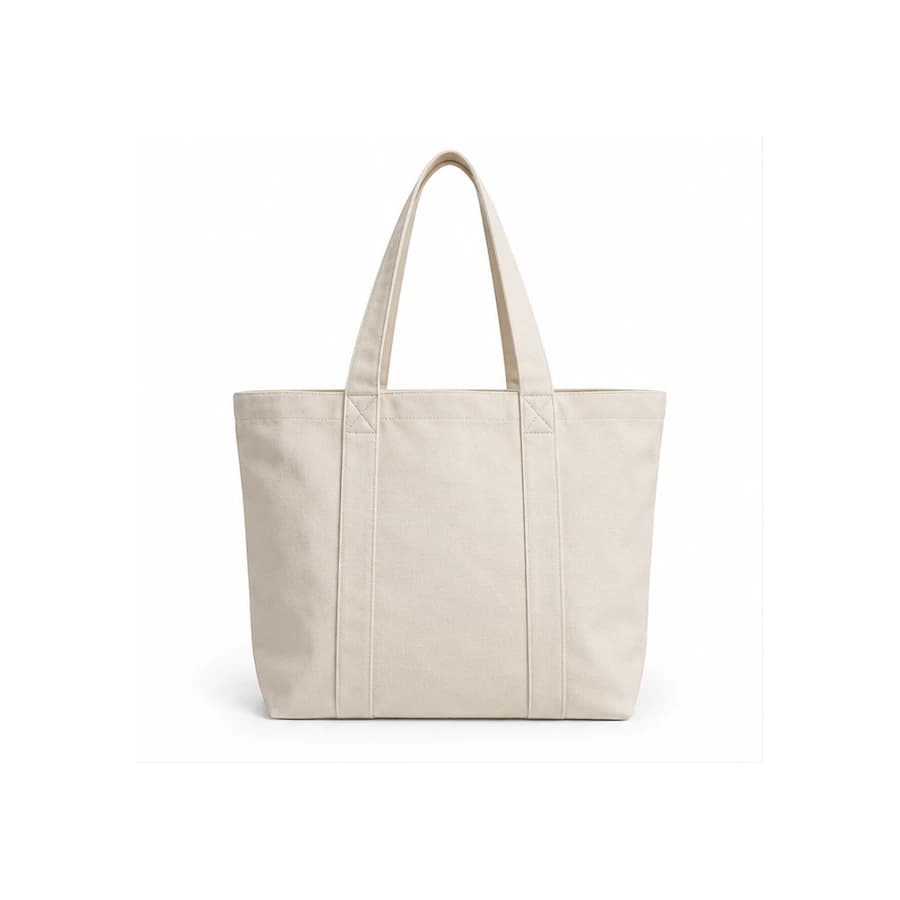
Screen printed tote bags carry a logo pushed through a fine mesh screen, one ink colour at a time, onto cotton, canvas or similar fabric. The method suits bold, solid-colour artwork on a flat panel and gives a crisp, durable print. Choose the bag first, keep the ink count low and approve the digital proof before production.
This guide explains how screen printing on cotton and canvas totes works, how to prepare artwork that prints well, which bags in our range list screen printing, when another technique fits better and how to order. Every product, price and minimum below comes from the live zintora.uk product pages. If you are still deciding whether a branded bag is right for your brand at all, start with our guide to printed tote bags for business, and see all models on our printed tote bags page.
How screen printing on a tote bag works
Screen printing is a stencil method. A screen of fine mesh is stretched on a frame, and the parts of the design that should print are left open while the rest is blocked. The bag lies flat under the screen, ink is placed on top and a squeegee pulls it across, pressing ink through the open mesh onto the fabric. The ink is then cured so it bonds with the fibres.
Three consequences follow from that process, and they shape every decision about custom printed tote bags:
- One screen per colour. Each ink colour is printed through its own screen, so a two-colour logo means two passes. More colours mean more set-up, which is why one or two colours are the usual choice.
- Solid colours print best. Screen printing lays down flat areas of ink. Gradients, photographs and very fine shading do not translate well, because the mesh either lets ink through or it does not.
- A flat panel matters. The screen needs an even surface. Seams, gussets and pockets get in the way, so the print sits on the main face of the bag.
That is why the product pages describe screen printing as suited to designs in one or a few colours, and why the Metro Tote Bag page calls it suited to large logos.
Artwork rules for screen printed tote bags
Good artwork does most of the work. Before you request a quote, check your file against these rules.
Send vector files. Every product page asks for your logo as a vector PDF, SVG or EPS. A high-resolution PNG with a transparent background can also work, but a vector file lets the screens be made at any size without blurring the edges.
Count your inks. Count each distinct colour in the design, not including the bag colour. A logo with black text and a red mark is two inks. If the logo has a version in one colour, consider using it: the print stays sharp and the set-up stays simple.
Use solid colours. Replace gradients with flat colour, and avoid photographic images. Halftones are possible in screen printing in principle, but on a woven cotton surface they lose detail, so ask in the quote before designing around them.
Mind the line weight. Very thin lines and small text can fill in or break up on woven fabric. On a textured fibre such as jute, the Jute Tote Bag page notes that simple designs and thick strokes tend to work best.
Think about ink on the bag colour. A dark ink on a natural or off-white bag reads clearly. A light ink on a black or navy bag also works, but it behaves differently from the same ink on a light bag. The digital proof shows the ink colour on each bag colour before production, so check every colourway you order.
Size the print to the panel. The printable area depends on the bag. The Metro Tote Bag page says its print area is large and takes bold designs, and the Contrast Handle Tote Bag page notes a central panel with no seams, with room for a large logo or a campaign message. The proof confirms the exact position and size.
Fabric weight and handles: choosing the bag
The bag decides how long the print stays in use. A heavy canvas tote is carried for years; a light bag is a handout for a single day. The table lists totes from the current range that offer screen printing, with the details each product page states. Prices are starting prices shown in the catalogue on 15 October 2026, ex VAT; printing and delivery are extra, UK import VAT and duties are paid on delivery.
| Bag | What the product page states | Techniques listed | From (ex VAT) | Minimum |
|---|---|---|---|---|
| Canvas Market Tote Bag | Long shoulder handles, labelled recycled cotton, off-white, sand or olive | Screen printing | £3.93 | 50 |
| Metro Tote Bag | 340 g/m² cotton canvas, cross-stitched handles, inner zipped pocket, flat base | Screen printing, embroidery | £5.36 | 50 |
| Premium Canvas Tote Bag | Canvas, long handles, indicative load of 5 kg | Screen printing, transfer, embroidery | £8.58 | 25 |
| Contrast Handle Tote Bag | Polyester canvas, 48 × 35 cm, contrast handles and base | Screen printing, transfer, embroidery | £9.29 | 25 |
| Jute Tote Bag | About 41 × 29.5 × 31 cm, structured base | Screen printing, transfer, embroidery | £10.01 | 25 |
| Fold Packable Tote Bag | Ripstop nylon, folds into its own pouch, stated load of 15 kg | Screen printing | £10.72 | 50 |
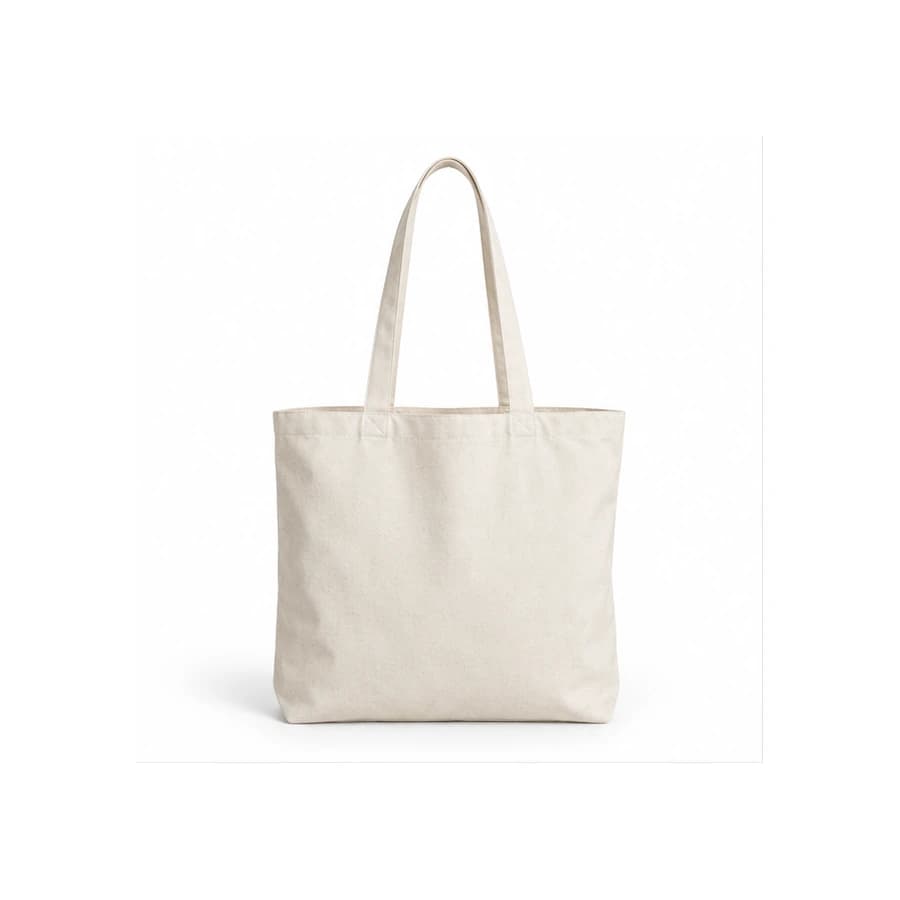
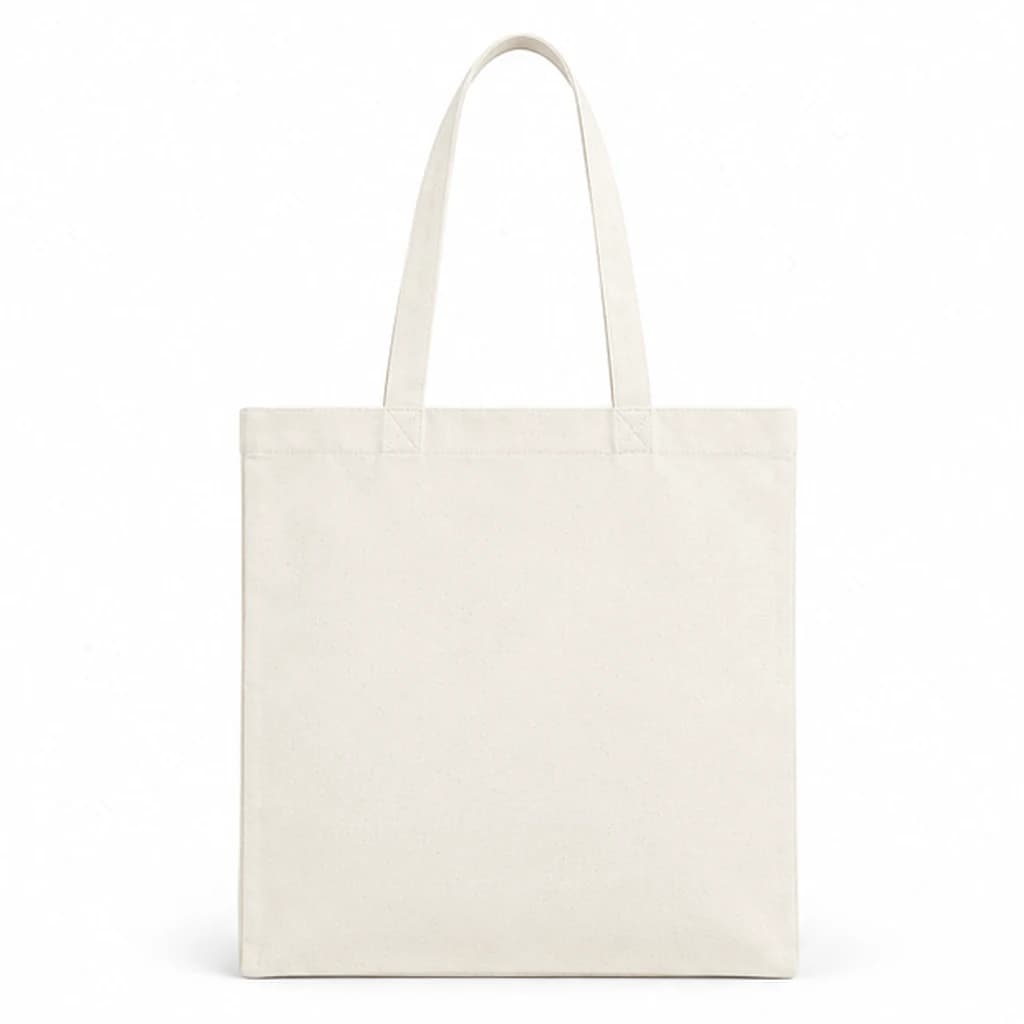
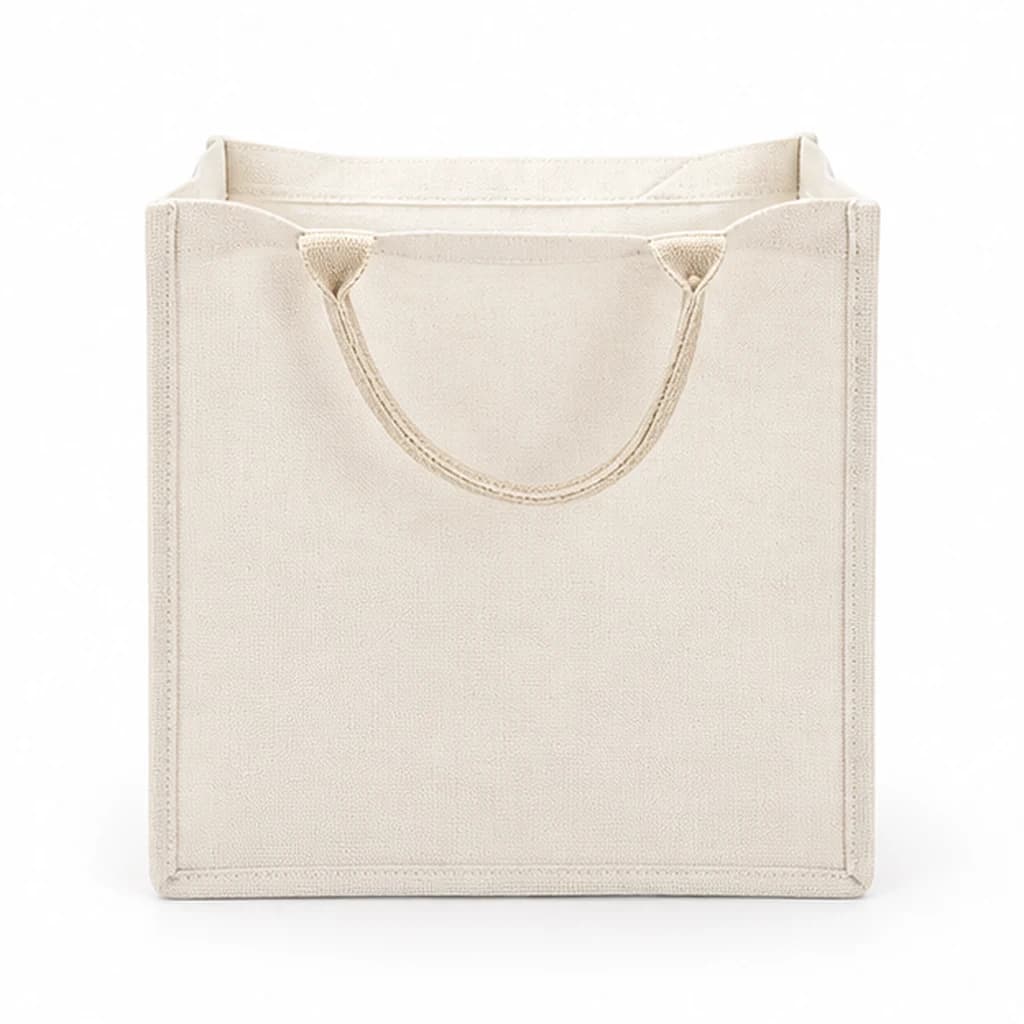
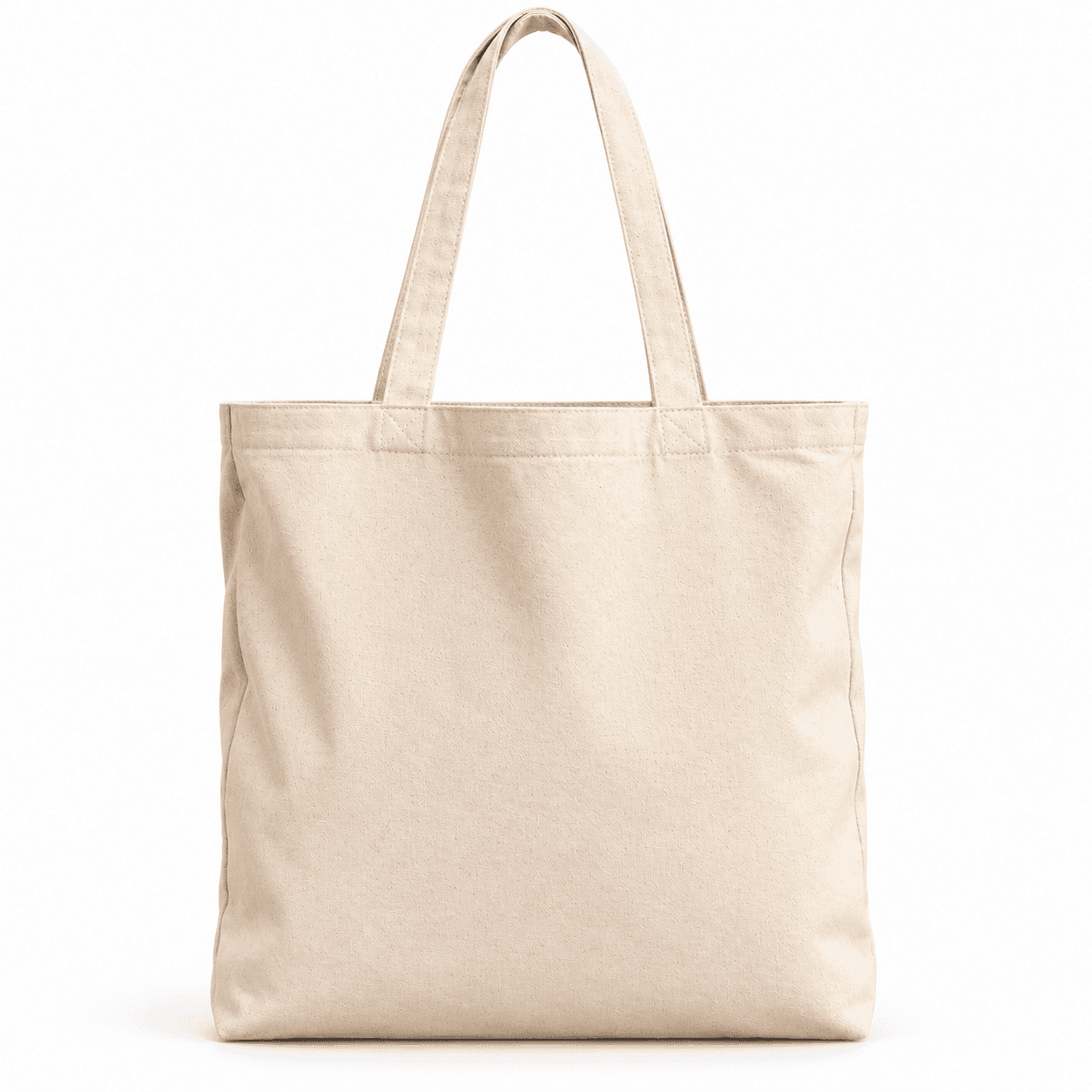
A few notes on the details:
- Heavyweight canvas. The Metro Tote Bag, at 340 g/m², is the heaviest fabric in this list. Its reinforced handles and flat base suit a conference bag that stays in circulation as a work or shopping bag afterwards.
- Shoulder handles. The Canvas Market Tote Bag has long handles for carrying over the shoulder and a relaxed shape. Its natural off-white tone, the page says, gives printed logos a warm look.
- Lighter cotton. The Everyday Cotton Tote Bag is a 38 × 42 cm, 150 g cotton bag in natural or black with a stated load of up to 5 kg, from £8.58 ex VAT for a minimum of 100. Its page lists the technique as to be confirmed based on design, so ask whether screen printing fits your artwork.
- Packable bags. On the Fold Packable Tote Bag, the logo can be printed on both the bag and its pouch, so the brand shows when it is folded.
Printed cotton tote bags versus other fabrics
Cotton and canvas are the classic surfaces for screen printing: the weave is even, the ink bonds well and the result looks like part of the bag. Printed cotton tote bags are also the most familiar format for printed shopping bags handed out by shops and at events.
Other fabrics in the range take screen printing too, with different results. Jute has a coarse, visible texture, so the print shows the weave through it; that suits a natural look but not small detail. Polyester canvas, as on the Contrast Handle Tote Bag, is lighter and folds easily into a suitcase. Ripstop nylon on the Fold Packable Tote Bag gives a bag that disappears into a pocket. Each product page states its own material, size and load, and the proof confirms how the print sits on that fabric.
When another technique fits better
Screen printing is the default for tote bags with logo artwork in one or two flat colours, but it is not always the best fit:
- Small logo, premium feel. Embroidery gives a more textile finish to a small logo, as the Metro Tote Bag page puts it. It suits welcome kits and staff bags where the bag should look like a product rather than a giveaway.
- Many colours or fine detail. Transfer is listed on the Premium Canvas Tote Bag, the Contrast Handle Tote Bag and the Jute Tote Bag. Ask in the quote whether transfer suits a full-colour or detailed design on the bag you have chosen.
- Very large designs on textured fibre. On jute, keep artwork simple whatever the technique, and check the proof carefully.
The final technique is always confirmed according to the design, material and quantity. For a side-by-side view of the main decoration methods across all products, read our guide to merchandise printing methods.
How to order custom canvas tote bags
Ordering is quote-led. The steps are short:
- Choose the bag and colours in the catalogue, and note the minimum for that model.
- Send your artwork as a vector file, with the ink colours you want and the bag colours you plan to order.
- Request a quote with quantities, the delivery address or addresses and the date you need the bags. A specialist replies to every request.
- Approve the digital proof. It shows the product, position, dimensions and colours of the print.
- Production and delivery. Production takes 10 to 20 working days after proof approval, confirmed in the quote. Zintora delivers across the UK and internationally to Europe, the Middle East and Africa, Asia-Pacific and the Americas.
If the bags carry other items, such as a welcome kit or event materials, the Canvas Market Tote Bag and Jute Tote Bag pages note that the bag can be delivered already prepared with products inside. See our employee welcome packs for ready-made combinations, and our services page for kitting and delivery to several addresses.
Materials and documentation
Product pages state material characteristics as the supplier lists them, such as recycled cotton on the Canvas Market Tote Bag or recycled ripstop nylon on the Fold Packable Tote Bag. Request the documentation that applies to the specific model and batch with your quote. The only certificate we name is the GRS of The Tenth House, checked per lot; certificates for other products are available on request. Our sustainability page explains how we handle material claims, and our branded merchandise page shows the wider range.
Screen printed tote bags checklist
- Bag chosen for its use: heavyweight canvas for daily carrying, lighter fabric for one-day handouts
- Minimum order checked on the product page
- Logo supplied as vector PDF, SVG or EPS
- Ink colours counted, ideally one or two
- Gradients and photographs replaced with solid colours
- Thin lines and small text thickened for woven fabric
- Ink colour checked against every bag colour ordered
- Print size and position agreed on the proof
- Alternative technique considered for small or detailed logos
- Delivery addresses and the date the bags are needed listed in the quote request
Frequently asked questions
What artwork works best for screen printed tote bags?
Bold logos in one or two solid colours, supplied as vector files. Avoid gradients, photographs and very fine lines, which do not hold well on woven cotton or canvas.
How many colours can be screen printed on a tote bag?
Each colour needs its own screen and pass, so the count affects set-up and price. Most tote designs use one or two colours; ask in the quote for anything more.
Which tote bag is the cheapest to screen print?
In the current range, the Canvas Market Tote Bag starts from £3.93 ex VAT for a minimum of 50, and the heavier Metro Tote Bag from £5.36 ex VAT. Printing and delivery are extra.
Can I screen print on a black tote bag?
Yes. Several models come in black, such as the Metro Tote Bag and the Premium Canvas Tote Bag. The digital proof shows the ink colour on each bag colour before production.
Is embroidery better than screen printing on a tote bag?
It depends on the logo. Screen printing suits large, flat designs; embroidery suits a small logo with a textile finish. The Metro Tote Bag offers both.
Ready to brief your bags? Browse the catalogue or request a quote with the bag model, quantity, ink colours and delivery date. A specialist replies to every request.