Merchandise Printing: Which Branding Method Suits Each Product?
Merchandise printing methods compared: screen printing, DTG, embroidery, transfer, sublimation, pad printing, laser engraving, UV printing and foil, by product.
By Zintora Team
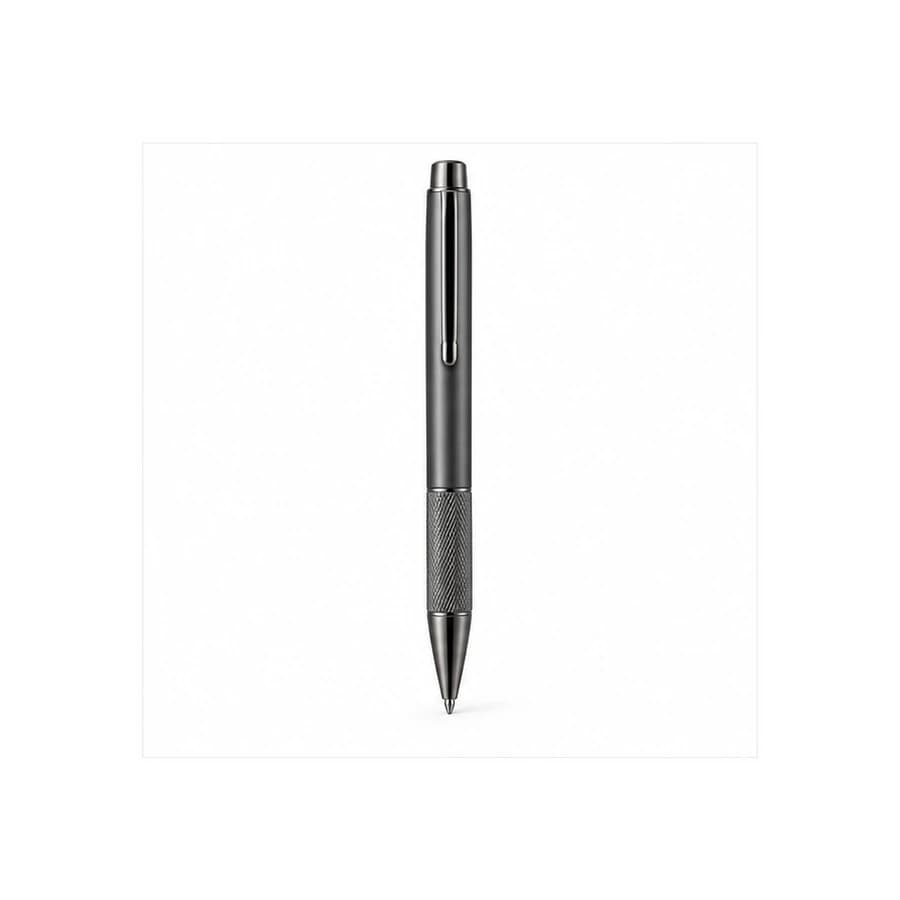
Merchandise printing is how your logo gets onto a product, and the right method depends on the material: embroidery or screen printing for clothing, pad printing or laser engraving for pens and bottles, sublimation for polyester, foil or embossing for notebooks. Choose by material, artwork and quantity, then check the result on the digital proof.
This guide explains the branding methods offered on the Zintora catalogue, which products each one is listed on, what each is good at and where it struggles. Everything about which method applies to which product comes from the live product pages. If you are only branding T-shirts, our guide to T-shirt printing for business goes deeper on garments.
Merchandise printing methods at a glance
| Method | Typical materials | Listed on (examples) | Best for | Watch out for |
|---|---|---|---|---|
| Screen printing | Cotton, canvas, card, some hard surfaces | T-shirts, polos, hoodies, tote bags, notebooks, bottles | One or two flat colours, larger runs | Each colour adds a screen |
| DTG printing | Cotton-rich garments | T-shirts, polos, crew neck sweatshirts | Full-colour and photographic artwork | Results vary with fabric and garment colour |
| Embroidery | Garments, caps, bags, beanies | Polos, hoodies, caps, beanies, backpacks, sports bags | Chest logos, uniforms, a premium look | Fine lines and tiny text |
| Transfer | Garments, caps, bags | Caps, backpacks, sports bags, some T-shirts and polos | Names, numbers, varied artwork | A different hand feel from embroidery |
| Sublimation | Polyester and treated surfaces | Flags, the Lightweight T-Shirt, the Glide Mouse Mat, the Fieldline Bucket Hat | All-over, edge-to-edge colour | Works only on suitable materials |
| Pad printing | Curved plastic and metal | Linea Gel Pen, Signal Wireless Mouse, Beacon Solar Power Bank | Small logos on curved surfaces | Small print area |
| Laser engraving | Metal, wood, bamboo, cork | Steel bottles, travel mugs, Arc Metal Pen, cork desk mat, monitor stand | A permanent one-tone mark | No colour; the mark is the material's own tone |
| UV printing | Hard surfaces | Bottles, mugs, notebooks, tech gadgets | Full-colour logos on hard items | Ask about placement on curved surfaces |
| Foil stamping and embossing | Paper, card, covers | Ledger Hardcover Journal, Forma Notebook, Crate Premium Gift Box | A premium, tactile finish on stationery and boxes | Simple shapes work best |
| Ceramic printing | Ceramic and stoneware | Cobble Ceramic Mug, Ember Mug | Durable marks on mugs | Mug-specific |
| Patches and labels | Garments, caps, bags | Woven label and leather patch on caps and beanies, rubber patch on backpacks | A crafted look without stitching the logo directly | Patch size and shape set the design |
Screen printing
Screen printing pushes ink through a mesh screen, one screen per colour. It gives strong, flat colour and is the classic choice for T-shirts, tote bags and larger runs of the same design. It is listed on most of the T-shirts, polos and hoodies in the catalogue, on tote bags such as the Metro Tote Bag and the Canvas Market Tote Bag, and on many notebooks and bottles. Because each colour needs its own screen, a two-colour logo costs more to set up than a one-colour logo, so it pays to ask whether a single-colour version of your logo would work. Our printed tote bags page lists the bags that take screen printing with their prices.
DTG printing
Direct to garment (DTG) prints the artwork straight onto the fabric, a little like an inkjet printer. It handles full colour, gradients and photographs without screens, which makes it useful for smaller runs and complex artwork. It is listed on T-shirts such as the Classic T-Shirt and the Core Cotton T-Shirt, on the polos and on hoodies and sweatshirts such as the Crew Neck Sweatshirt. See the T-shirts with their methods on our custom T-shirts page.
Embroidery
Embroidery stitches the logo into the fabric with thread. It looks smart, survives frequent washing and is the default for polo chest logos, caps and uniforms. The catalogue also lists variants: tone-on-tone embroidery on the Traverse Backpack, and 3D (raised) and flat embroidery on the Northstar Cap. Embroidery struggles with very fine lines and small text, so a simplified version of the logo often stitches better. Large designs take more stitches, which affects cost.
Transfer printing
A transfer is printed separately and then applied to the product with heat and pressure. It is listed on caps, backpacks, sports bags and some garments, and it handles multi-colour artwork, names and numbers on short runs. The Harbor Zip Hoodie lists heat transfer alongside embroidery. Transfers feel different from embroidery or screen print, so ask about the finish if hand feel matters.
Sublimation
Sublimation turns special inks into a gas that bonds with polyester or treated surfaces, so the colour becomes part of the material. That allows edge-to-edge or all-over designs: the Glide Mouse Mat lists edge-to-edge sublimation, the Fieldline Bucket Hat offers all-over sublimation as an alternative to embroidery, and the flags in the catalogue use sublimation or full-colour printing. It only works on suitable materials, which is why you will not see it on a cotton tee.
Pad printing
Pad printing transfers ink from an etched plate to the product via a soft silicone pad, which can wrap around curves. That makes it a natural fit for pens, mice and other small curved items. It is listed on the Linea Gel Pen (pad printing on the body), the Signal Wireless Mouse, the Pivot Ergonomic Mouse and the Beacon Solar Power Bank. The print area is small, so keep the logo simple. Our promotional pens page shows which pens take pad printing and which are engraved.
Laser engraving
A laser removes a thin layer of the surface to leave a permanent mark in the material's own tone. There is no ink to wear off, and the look is understated. It is listed on steel bottles such as the Atlas Steel Bottle, on travel mugs such as the Voyage Travel Mug, on the Arc Metal Pen and the Quill Bamboo Pen, on the Terrain Cork Desk Mat and the Align Monitor Stand, and on many tech gadgets. Engraving is one tone, so it suits logos that read well without colour. Browse the engravable bottles on our branded water bottles page.
UV printing
UV printing cures ink instantly with ultraviolet light, which allows full-colour logos on hard surfaces. It is listed on many bottles, mugs, notebooks and tech gadgets, often alongside laser engraving and screen printing. It is a good choice when the logo needs its brand colours on a hard item.
Foil stamping, embossing and debossing
For paper and card, pressing is more elegant than printing. The Ledger Hardcover Journal lists foil stamping, the Forma Notebook lists blind embossing and foil embossing, the Slate Stone Paper Notebook lists embossing and the Crate Premium Gift Box lists foil stamping. These finishes suit premium stationery and gift boxes where you want a tactile mark rather than ink. Simple shapes and bold lines work best.
Patches, labels and other finishes
Some products are branded with an applied piece rather than ink or thread: a woven label or leather patch on the Crest Beanie, a leather patch on the Northstar Cap, a rubber patch on the Traverse and Commute Roll-Top backpacks, and an appliqué patch on the Summit Hoodie. There are also product-specific finishes, such as reflective printing on the Commute Roll-Top Backpack and custom keycaps on the Orbit Keyboard.
How to choose a merchandise printing method
Four questions settle most decisions:
- What is the material? Fabric points to embroidery, screen printing, DTG or transfer; metal and wood to engraving; curved plastic to pad printing; paper to foil or embossing.
- How many colours does the logo have? One colour suits almost everything. Full colour points to DTG, UV printing, transfer or sublimation.
- How many units? Screen printing rewards larger runs of one design; DTG and transfer suit varied or smaller runs.
- What look do you want? Embroidery and engraving read as premium and discreet; full-colour print reads as promotional.
When a product lists several methods, the quote can price more than one so you can compare. The digital proof shows the mark on the chosen product and colour before anything goes into production.
Prices, minimums and lead times
Branding is priced on top of the product's starting price. Starting prices on the product pages are ex VAT; printing and delivery are extra, UK import VAT and duties are paid on delivery, and the quote confirms the final figure. As examples, the Arc Metal Pen starts from £6.08 ex VAT (minimum 50), the Atlas Steel Bottle from £12.87 ex VAT (minimum 25) and the Classic T-Shirt from £6.79 ex VAT (minimum 25).
Minimums depend on the product, and each product page states its own. Our general lead time is 10 to 20 working days after proof approval, confirmed in the quote. We deliver across the UK and internationally to Europe, the Middle East and Africa, Asia-Pacific and the Americas. For a broader view of the range, see our branded merchandise page.
Sustainability questions to ask
The branding method is only one part of a product's footprint. If you report on purchasing, ask with the quote for an estimated carbon footprint per product, sustainability reports with Scope 3 data and certificates for certified products on request. The only certificate supplier we name is GRS of The Tenth House, checked per lot. We do not buy carbon credits and never describe merchandise as carbon neutral.
Merchandise printing checklist
- Logo supplied as a vector file, with a one-colour version
- Brand colours listed as references the supplier can match
- Method chosen for each product's material
- Position and size agreed for each item
- Simplified logo prepared for small embroidery or pad printing
- Quantities confirmed against each product's minimum
- Digital proof checked on the real product colour
- Date needed, counted back from 10 to 20 working days after proof approval
Frequently asked questions
What is the most durable way to brand merchandise?
It depends on the material. Laser engraving on metal and wood, embroidery on garments and ceramic printing on mugs are common choices for long-lasting marks. Ask which methods each product supports.
Which printing method is best for a full-colour logo?
DTG on cotton garments, UV printing on hard items, transfer on caps and bags, or sublimation on suitable polyester items. Screen printing works too, but each colour adds a screen.
Can I use different methods on one order?
Yes. Many orders combine methods, such as an embroidered polo, an engraved bottle and a foil-stamped notebook. Each product keeps its own minimum and lead time, which the quote confirms.
Do I need a vector logo?
It helps. A vector file (AI, EPS, SVG or PDF) gives the cleanest result for every method. If you only have an image file, send it and ask about the options.
Will I see the branding before production?
Yes. The digital proof shows the method, position and size on the chosen product before production starts.
Ready to brand your merchandise? Browse the catalogue or request a quote with the products, quantities and logo. A specialist replies to every request.