Printed Tote Bags for Business: How to Choose Fabric, Handles and Branding
A practical guide to choosing the right printed tote bag for your company: materials, branding, minimum quantities and where it fits in a welcome kit or corporate gift.
By Zintora Team
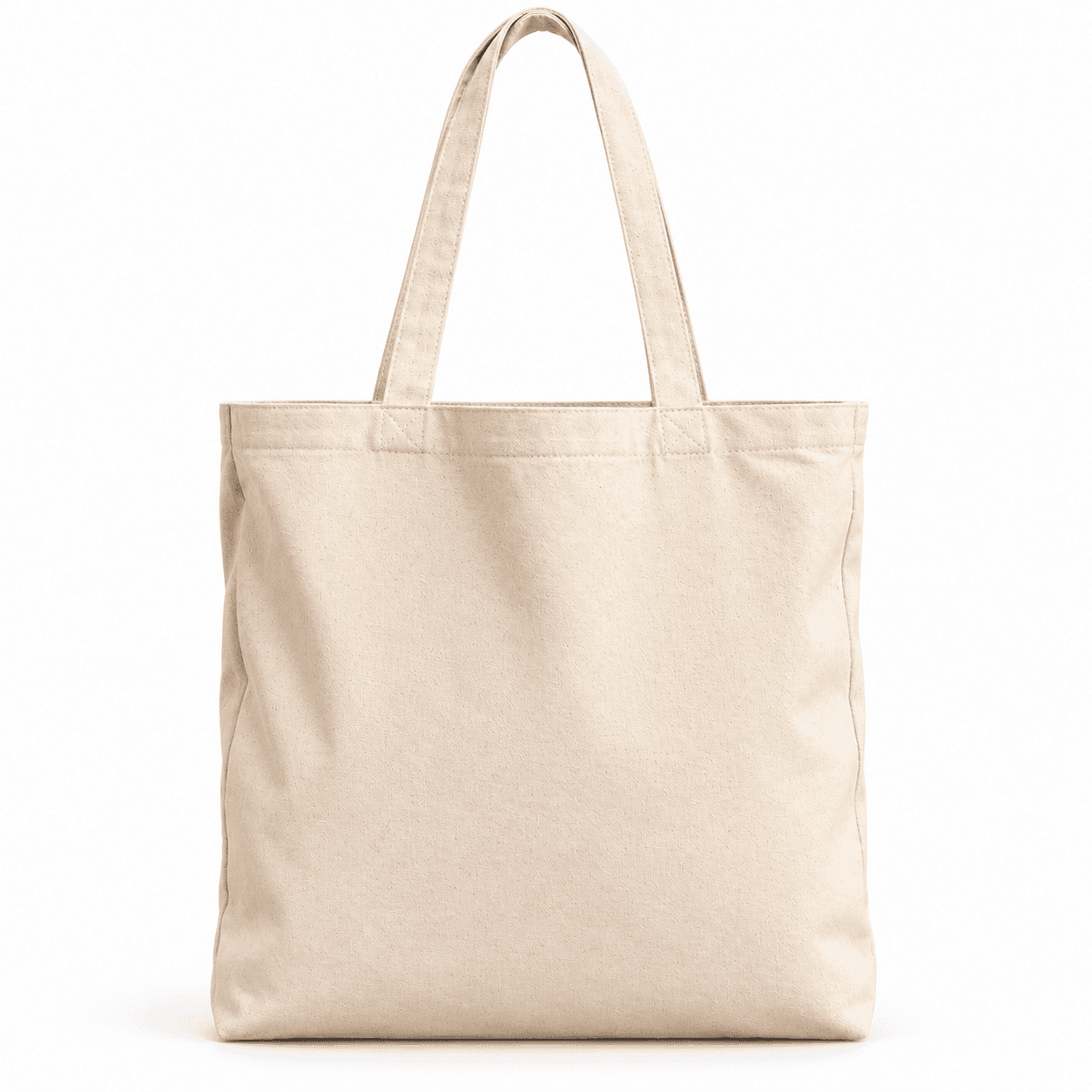
To choose printed tote bags for business, first fix the use: trade show, welcome kit or daily shopping. Then compare the fabric, size, handles and branding area of each model, together with its minimum order. Ask for a digital proof of the logo before production and confirm the lead time in the quote.
Why the tote bag is the item most reused outside the office
Related catalogue product: Fold Packable Tote Bag.
Of everything that goes into a welcome kit or a shipment to a client, the tote bag is one of the few items that keeps working after the first day. A T-shirt gets washed and put away; a notebook gets filled and filed. A well-chosen printed tote bag goes with the weekly shop, the gym, the laptop on the way home and the case for a day trip, and on every one of those uses the logo goes with it. By design, it is the merchandise item with the most brand impressions per pound invested. You can see the models and their minimums in the catalogue of printed tote bags.
The problem is that "tote bag" covers too much ground. It runs from a thin cotton bag given away at a trade show that tears after two weeks, to a technical foldable tote designed to carry 15 kg without the handles giving way. Choosing the wrong end of the spectrum is what sends a corporate gift straight into a drawer.
What separates a serious corporate tote from a generic trade-show bag
The fabric and its weight
Thick cotton (220 g/m² or more) or recycled ripstop are the two materials that sustain real daily use. Below that, the bag loses its shape with the first serious weight (a folder, a bottle of water, the shopping) and lasts weeks, not years. The weight is the figure that almost never appears on the supplier's product sheet, and it is the first thing to ask for.
The handle stitching, not the print
The point where a tote almost always fails is the join between the handle and the body of the bag. A simple seam gives way under repeated weight; a double reinforcement or a cross stitch lasts years of daily use. Before approving an order, it is worth asking the supplier for a photo of the detail of that seam, not just of the logo print.
Real capacity versus advertised capacity
As with bottles, the capacity in litres that the supplier advertises is rarely the usable capacity once the bag carries something of irregular volume, such as a box or extra merchandise. If the intended use is carrying a laptop and a folder, confirm the exact interior measurements, not just the nominal volume.
The model we use in most of our kits
For orders where storage space or shipping cost matters, the Fold foldable tote bag solves a real problem: it folds into its own palm-sized pouch, which drastically reduces the shipping volume in large orders, and it still unfolds to carry 15 kg thanks to its recycled nylon ripstop. It is the option we recommend when the tote goes inside a kit with more items: the less space it takes up in the box, the less it costs to ship the complete kit.
For gifts where feel and perceived quality weigh more than logistics, such as a brand event or a gift to a strategic client, thick cotton with long shoulder handles remains the safest option: it is not foldable, but it conveys weight and care in a way that technical nylon does not.
Screen printing, textile transfer or embroidery: which branding to use on a tote
Screen printing is the most economical option and the most common on cotton: it works well with one or two colours and large runs, although it loses sharpness on logos with a lot of detail or gradients. Digital textile transfer reproduces full-colour marks with no additional cost per number of inks, but it makes the order more expensive and does not always withstand as many washes as screen printing. Embroidery is the most durable option and the one that best conveys premium quality, but it only works well with simple logos, such as an icon or initials, because thread does not reproduce fine detail or small text precisely.
A common mistake: ordering embroidery on thin nylon ripstop. The needle perforates the technical fabric and can weaken the area around the embroidery with use. On nylon or recycled polyester, screen printing or textile transfer are the safe options; keep embroidery for cotton or hemp.
Where the tote fits within a wider corporate gift
The tote is almost never the only item in the order. It works best as the piece that holds the rest of an employee welcome pack (notebook, bottle, sweatshirt), because it is the only item in the kit designed to carry the others, not just to accompany them. It is also a common base in batches of corporate gifts for events or trade shows, where its low cost per unit lets you reach large quantities without lowering the perceived quality.
If sustainability is part of the purchasing argument for the procurement department, it is worth first reading about which sustainable merchandise certifications carry real weight, because "reusable" is not itself a certification: it is a property of the product that reinforces the argument, but does not replace it.
Minimum quantity and lead times: what changes with the material
- Standard cotton with screen printing: minimums are usually lower than for the other options. Each product page states its own, and standard production is 10 to 20 working days after you approve the proof, confirmed per order in the quote.
- Technical foldable ripstop: minimums tend to be somewhat higher because the making-up process includes the integrated pouch, and the lead time can lengthen if the order has a pouch in a different colour from the body of the bag.
- Embroidery on thick cotton: embroidery adds machine programming time the first time a new logo is used, so it is worth adding a few extra days for the first run only.
Mistakes that make the order more expensive for no reason
- Ordering a handle colour different from the body without confirming the minimum per colour. Many suppliers treat each colour combination as a different reference, with its own minimum order.
- Approving the final artwork without seeing a physical sample of the real fabric. A digital mock-up does not show how the print behaves on a textured fabric, especially on ripstop.
- Not calculating the shipping volume before choosing the model. A thick cotton tote takes up several times more space in the box than a foldable one, and that translates directly into transport cost when the order exceeds several hundred units.
How much to budget
The price per unit depends on the material, the branding technique, the exact quantity and the number of colours. As a rule, thick cotton with one-colour screen printing sits at the lower end, the foldable version in recycled ripstop in the middle, and embroidery on premium cotton at the upper end, depending on the size of the embroidered area. As always, treat this as a starting point for comparing quotes, not as a closing price: the supplier, the exact quantity and the number of colours move the final range. Each product page shows its current starting price.
The next step
If you already know which model fits your order, build your quote with the quantities you are working with. If you are still comparing bag, backpack or bottle formats for the same kit, the full catalogue shows all the available items with a starting price and the minimum quantity visible before you order anything, and if the kit is for new starters, what to put in a sustainable welcome kit is the guide that completes it.