Custom Polo Shirts: A Buyer's Guide to Branded Polos for Teams
How to choose custom polo shirts for uniforms, events and client-facing teams: fabrics, embroidery or print, logo placement, sizes, prices ex VAT and minimums.
By Zintora Team
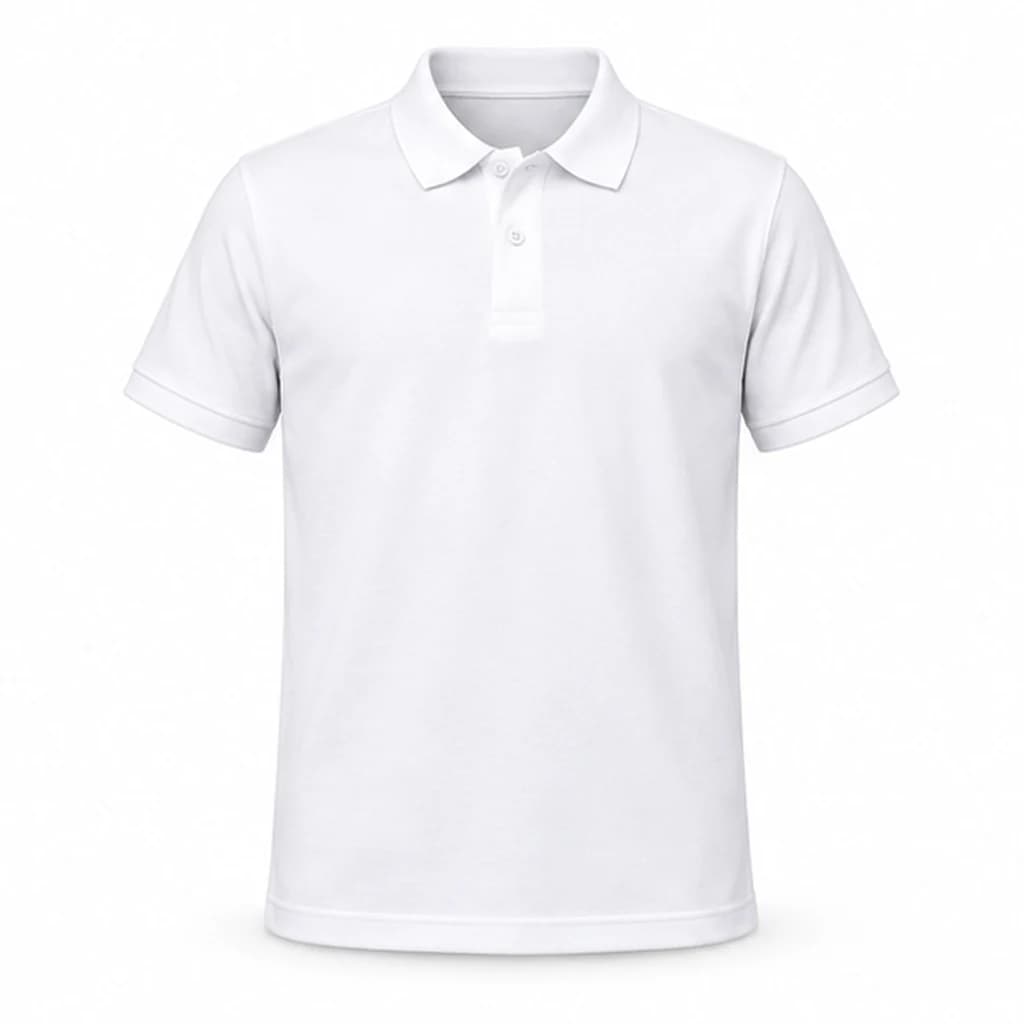
Custom polo shirts are cotton or technical polos branded with your logo, usually by embroidery on the left chest, and worn as smart team uniforms, event staff wear and client-facing kit. Choose the fabric for the job, keep the logo small, collect sizes early and allow 10 to 20 working days after proof approval.
This guide walks through the polo shirts in the Zintora catalogue, how to choose a fabric, when to embroider and when to print, where to place the logo and how to order for a mixed team. Every price and minimum below comes from the live product pages. If you are kitting out a whole team rather than buying polos alone, our guide to branded workwear covers the wider uniform.
Why a polo shirt rather than a T-shirt?
A polo sits between a T-shirt and a shirt. The collar and placket make it look tidy at a reception desk, on a stand or at a client site, while the knitted fabric keeps it comfortable through a long shift. That is why polos are the default for customer-facing teams, trade show staff, hospitality and retail.
A T-shirt is cheaper and better for one-day events, runs and campaigns where the shirt doubles as a souvenir. A polo makes more sense when people wear it every week and the garment has to look the same after many washes. If you are weighing the two, our custom T-shirts page lists the tees with their prices, and the comparison is easy to make side by side.
Custom polo shirts in the catalogue
These are the polo models currently live, with their starting prices and minimums. Prices are starting prices per unit, ex VAT; printing and delivery are extra, UK import VAT and duties are paid on delivery, and the quote confirms the final figure.
| Model | What the product page says | From (ex VAT) | Minimum | Branding methods |
|---|---|---|---|---|
| Basic Polo | 200 g/m² unisex polo, comfortable cut | £11.80 | 25 | Screen printing, DTG, embroidery |
| Classic Polo | Versatile short-sleeved polo | £12.51 | 25 | Screen printing, DTG, embroidery |
| Insignia Polo | 220 g/m² piqué, reinforced collar, modern cut | £12.80 | 10 | Embroidery, DTG, transfer |
| Lightweight Polo | Light fabric for summer teams and events | £13.58 | 25 | Screen printing, DTG, embroidery |
| Lightweight Technical Polo | For teams that need freedom of movement | £15.01 | 25 | Screen printing, DTG, embroidery |
| Corporate Polo | Clean lines for a uniform image | £16.08 | 25 | Screen printing, DTG, embroidery |
| Quick-Dry Polo | Technical quick-dry fabric | £16.44 | 25 | Screen printing, DTG, embroidery |
| Anti-Pilling Technical Polo | 190 g/m², moisture control, pilling-resistant finish | £16.80 | 25 | Screen printing, DTG, embroidery |
| Heavyweight Polo | 220 g/m² unisex polo | £17.16 | 25 | Screen printing, DTG, embroidery |
| Sustainable Polo | Responsible composition, documentation per batch | £17.87 | 25 | Screen printing, DTG, embroidery |
| Work Polo | Hard-wearing 200 g/m² unisex polo | £18.59 | 25 | Screen printing, DTG, embroidery |
| Premium Polo | Premium finish for uniforms and events | £21.45 | 25 | Screen printing, DTG, embroidery |
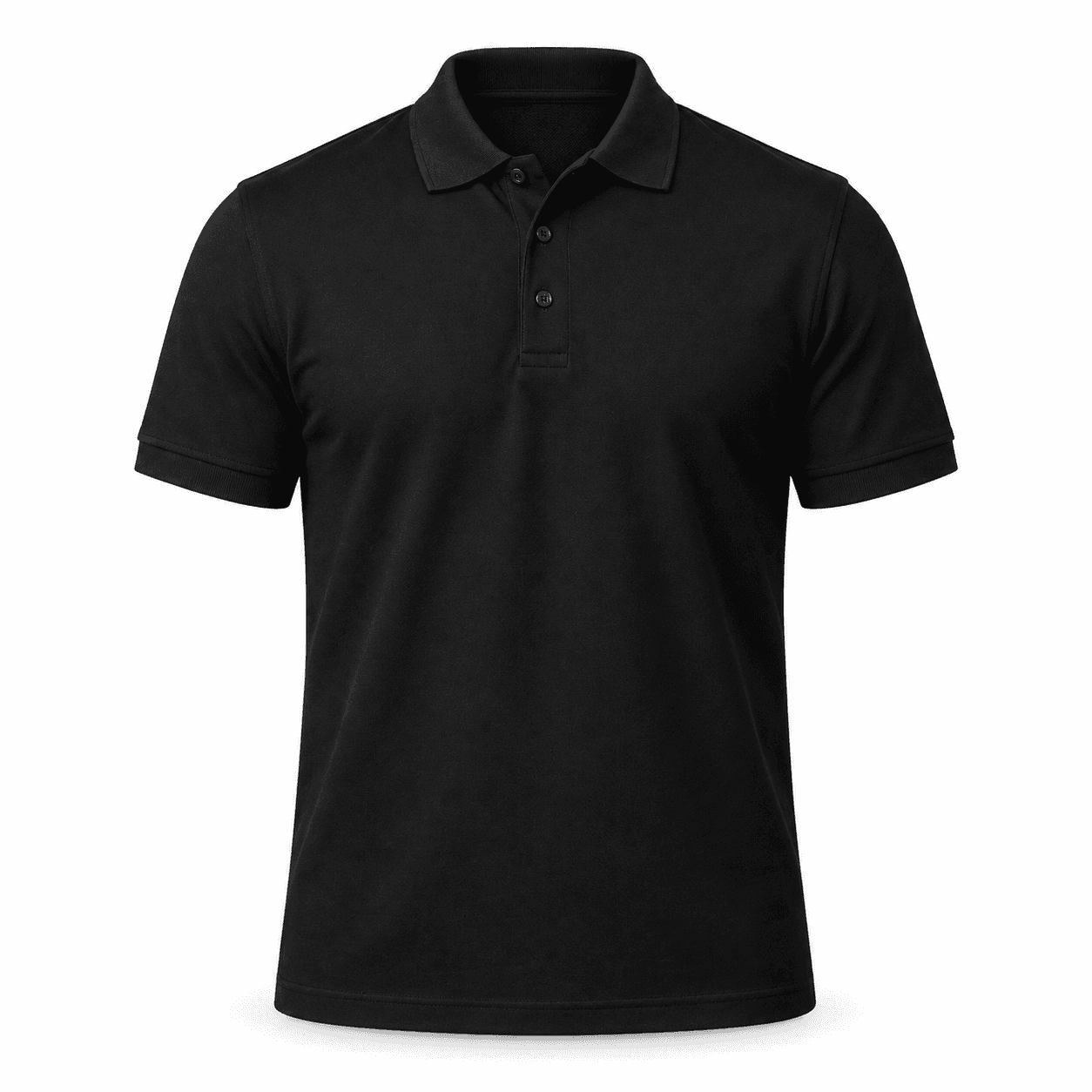

The spread is useful: an entry-level polo for a one-off event, a technical polo for active roles and a heavier or premium polo for uniforms that must last.
Choosing the fabric: cotton, heavyweight or technical
The fabric decides how the polo feels at four in the afternoon and how it looks after the twentieth wash. Three questions narrow the choice quickly.
How active is the role? Event crews, coaches and outdoor teams move and get warm. A technical fabric such as the Quick-Dry Polo or the Anti-Pilling Technical Polo, which its page describes as having moisture control, suits them better than a dense cotton.
How often is it washed? A polo worn three times a week needs a fabric with body. The weights on the product pages help: 190 g/m² for the Anti-Pilling Technical Polo, 200 g/m² for the Basic and Work Polos and 220 g/m² for the Heavyweight and Insignia Polos. A heavier fabric generally holds its shape and colour longer.
What image do you want? For reception, sales and account teams, the Corporate Polo or the Premium Polo gives a cleaner look. For volunteers at a one-day event, the Basic Polo or the Lightweight Polo keeps the cost per person down.
If you have a sustainability brief, the Sustainable Polo is listed with a responsible composition and documentation per batch. Ask for that documentation with your quote rather than relying on the product name.
Embroidered polo shirts or printed polo shirts?
Most polo models can be embroidered, screen printed or printed with DTG (direct to garment). The Insignia Polo also takes transfer. Each method has a natural home.
| Method | Best for | Watch out for |
|---|---|---|
| Embroidery | Left-chest logos, uniforms, a premium look that lasts | Very fine lines and small text; the logo may need simplifying |
| Screen printing | Larger back prints, one or two flat colours, bigger runs | Each colour adds a screen, so many colours cost more |
| DTG printing | Full-colour logos and photographic artwork | Works best on cotton-rich fabric; ask about dark colours |
| Transfer | Names, numbers and small runs of varied artwork | A different hand feel from embroidery |
For a polo, embroidery is the usual choice on the chest because it matches the smarter look of the garment and survives frequent washing. Printing makes sense for a large back print at an event, where the shirt needs to be read from a distance. You can combine the two: an embroidered chest logo with a printed back. For a wider comparison of these methods on tees and hoodies, see our guide to T-shirt printing for business.
Logo placement and size
A few placements cover almost every brief:
- Left chest: the standard for uniforms. Keep the logo compact so it sits neatly beside the placket.
- Right chest or sleeve: a second mark, such as a department name, a sponsor or a website.
- Back, upper: a large print for event staff so people can find them in a crowd.
- Nape of the neck: a small, discreet mark that reads as a detail rather than an advert.
Send the logo as a vector file if you can. For embroidery, ask whether a simplified version would stitch more cleanly; tiny text and thin outlines are the usual problems. The digital proof shows the placement and size on the chosen colour before anything goes into production, so check it on the real garment colour.
Sizes and fit for a mixed team
Sizing is where polo orders go wrong. Several models in the range are unisex, so a team of mixed builds needs a size run rather than a guess. Collect sizes before you request the quote, not after: ask each person, or use the size chart on the product page with a simple form. Add a small number of spares in the common sizes for new starters and replacements.
If you plan to reorder through the year, write down the model, colour, thread or ink colours and logo position from the first order. Repeating exactly the same specification is what keeps a uniform consistent.
Branded polo shirts by use
Different roles call for different polos. These pairings come from the product pages:
- Uniforms for front-of-house and retail: the Work Polo, described as hard-wearing, or the Corporate Polo for a clean look.
- Customer service and account teams: the Premium Polo or the Insignia Polo with a tone-on-tone or small coloured embroidery.
- Trade shows and event crews: the Lightweight Polo or the Quick-Dry Polo, with a back print so visitors can spot your team.
- Outdoor days, coaching and sports days: the Lightweight Technical Polo or the Anti-Pilling Technical Polo.
- Volunteers and one-day promotions: the Basic Polo keeps the budget per person low.
If you need hoodies or fleeces for the same team in winter, our custom hoodies page lists the models that pair well with a polo uniform.
Prices, minimums and lead times
The starting price is not the whole cost. The quote adds the branding method, the number of positions and colours, any packaging and delivery. Embroidery is usually priced by the size and stitch count of the logo; screen printing by the number of colours.
Minimums depend on the product. Most polo models in the range start at 25 units, and the Insignia Polo starts at 10. If you need only a handful of polos for a new hire or a small team, ask about print on demand, which is designed for single units and small runs on the models it supports.
Our general lead time is 10 to 20 working days after proof approval, confirmed in the quote. Add time for collecting sizes and approving the proof, and plan around any event date with a margin for delivery. We deliver across the UK and internationally to Europe, the Middle East and Africa, Asia-Pacific and the Americas, to one office or to several sites.
Sustainability without overclaiming
If you report on purchasing, ask for the details with your quote. We include an estimated carbon footprint per product in the quote, can provide sustainability reports with Scope 3 data and supply certificates for certified products on request. The only certificate supplier we name is GRS of The Tenth House, checked per lot; more on how we approach this is on our sustainability page. We do not buy carbon credits and never describe a polo as carbon neutral. In practice, the most sustainable uniform is a well-made polo that people keep wearing.
Custom polo shirts checklist
- Role and use defined: uniform, event, outdoor or one-day promotion
- Fabric chosen for activity level and washing frequency
- Branding method chosen: embroidery, screen printing, DTG or transfer
- Logo sent as a vector file, with a simplified version for small embroidery
- Positions agreed: chest, sleeve, back or nape
- Sizes collected per person, plus spares for new starters
- Colours checked against your brand and the thread or ink colours
- Delivery addresses listed: one office or several sites
- Date needed, counted back from 10 to 20 working days after proof approval
- Specification recorded for reorders
Frequently asked questions
What is the minimum order for custom polo shirts?
It depends on the product. Most polo models in our catalogue start at 25 units, and the Insignia Polo starts at 10. Each product page states its minimum. For a few units, ask about print on demand.
Is embroidery or printing better on a polo shirt?
Embroidery is the usual choice for a chest logo on a polo: it looks smarter and lasts through frequent washing. Screen printing or DTG suits larger back prints and full-colour artwork. Many teams combine an embroidered chest with a printed back.
How much do custom polo shirts cost?
Starting prices in the current range run from £11.80 ex VAT for the Basic Polo to £21.45 ex VAT for the Premium Polo. Branding, packaging and delivery are added in the quote, which confirms the final price.
How long does an order take?
Generally 10 to 20 working days after proof approval, confirmed in the quote. Collect sizes before you order so the proof and production are not held up.
Can you deliver polos to several sites?
Yes. Give the addresses in your request. We deliver across the UK and internationally to Europe, the Middle East and Africa, Asia-Pacific and the Americas, and transport per address is quoted separately.
Ready to brief us? Browse the polos in the catalogue or request a quote with the model, quantity per size, logo and the date you need them. A specialist replies to every request.