Types of reusable water bottle: Tritan, borosilicate, steel or aluminium
Compare reusable bottle types: Tritan, borosilicate glass, stainless steel and aluminium. Weight, temperature, lid, marking and real catalogue models to compare.
By Zintora Team
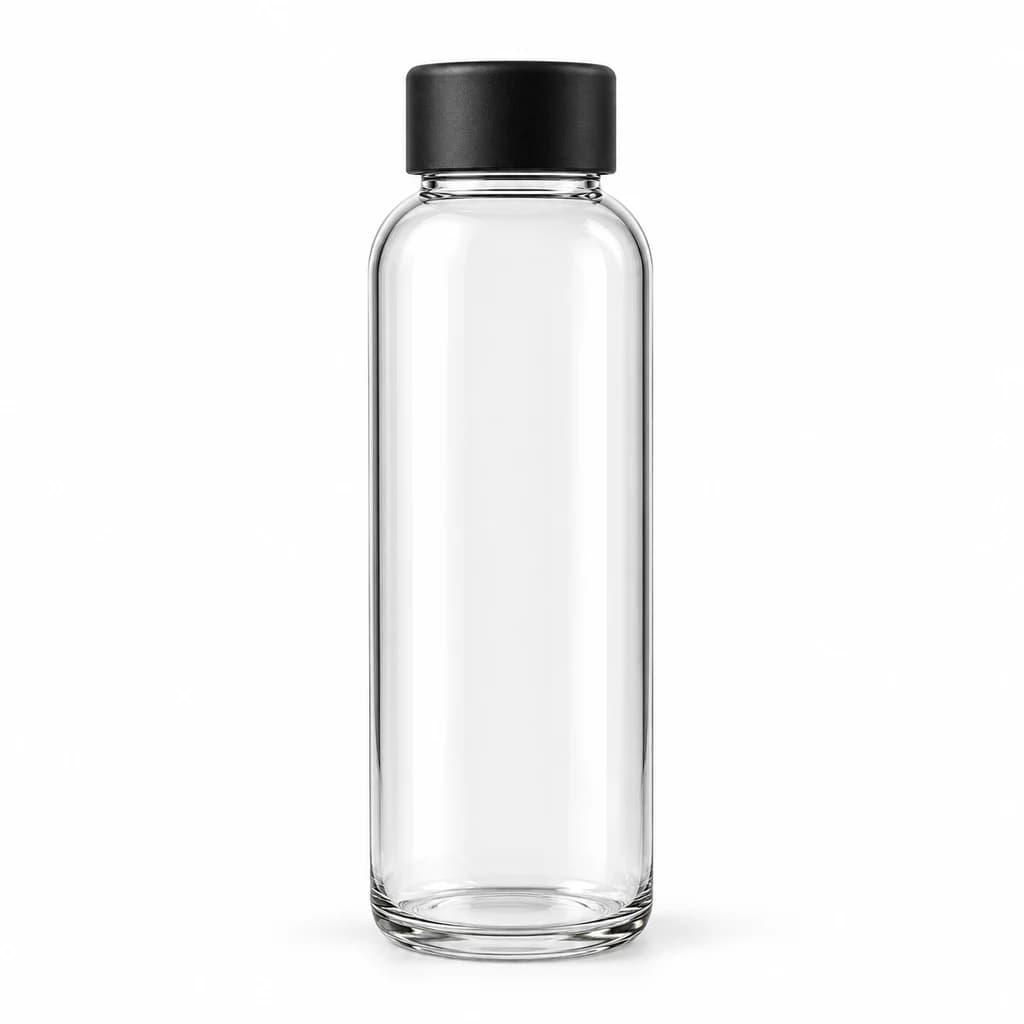
The four most common types of reusable bottle are Tritan, a light, clear copolyester; borosilicate glass, which does not insulate and weighs more; stainless steel, which is tough and keeps drinks hot or cold if it is double-walled and vacuum insulated; and aluminium, which is light and almost always single-walled. Choose by daily use, cleaning and how the bottle will be marked.
This guide compares the four materials, explains why the lid and the construction matter as much as the body of the bottle, and links real catalogue models. If you already know which material you want, go straight to every active model of branded water bottles.
What types of reusable bottle are there?
Before comparing brands or colours, separate three things: the material of the body, the construction (single wall or vacuum-insulated double wall) and the lid. Two bottles made of the same material can behave very differently if one is single-walled and the other insulated.
| Material | Weight | Temperature | Cleaning and care | Best-fitting use |
|---|---|---|---|---|
| Tritan | Light | Does not insulate: meant for cold or room-temperature drinks | According to the instructions for the specific model | Sport, team activities, events |
| Borosilicate glass | The heaviest of the four | Does not insulate on its own | Does not usually hold on to odours or flavours; the sleeve protects it from knocks | Office desk, wellbeing programmes |
| Stainless steel | Medium; heavier with a double wall | With a vacuum double wall it keeps drinks cold or hot | Very tough; the lid is cleaned separately | Daily use, long-lasting gifts, commuting |
| Aluminium | Very light | Normally single-walled, no insulation | Has an inner lining: ask for its data sheet | Events and activities where weight matters |
What is Tritan and when does it make sense?
Tritan is a copolyester brand from the manufacturer Eastman, not a generic name for any clear plastic. That is why the model's data sheet should name the material: "clear plastic" and "Tritan" are not the same thing.
Its strengths are transparency, low weight and better resistance to knocks than glass. It suits sports activities, team days and outdoor events, where a bottle gets dropped, thrown in a rucksack and refilled many times. It is not the option for hot drinks or for keeping drinks cold for hours: for that you need an insulated bottle.
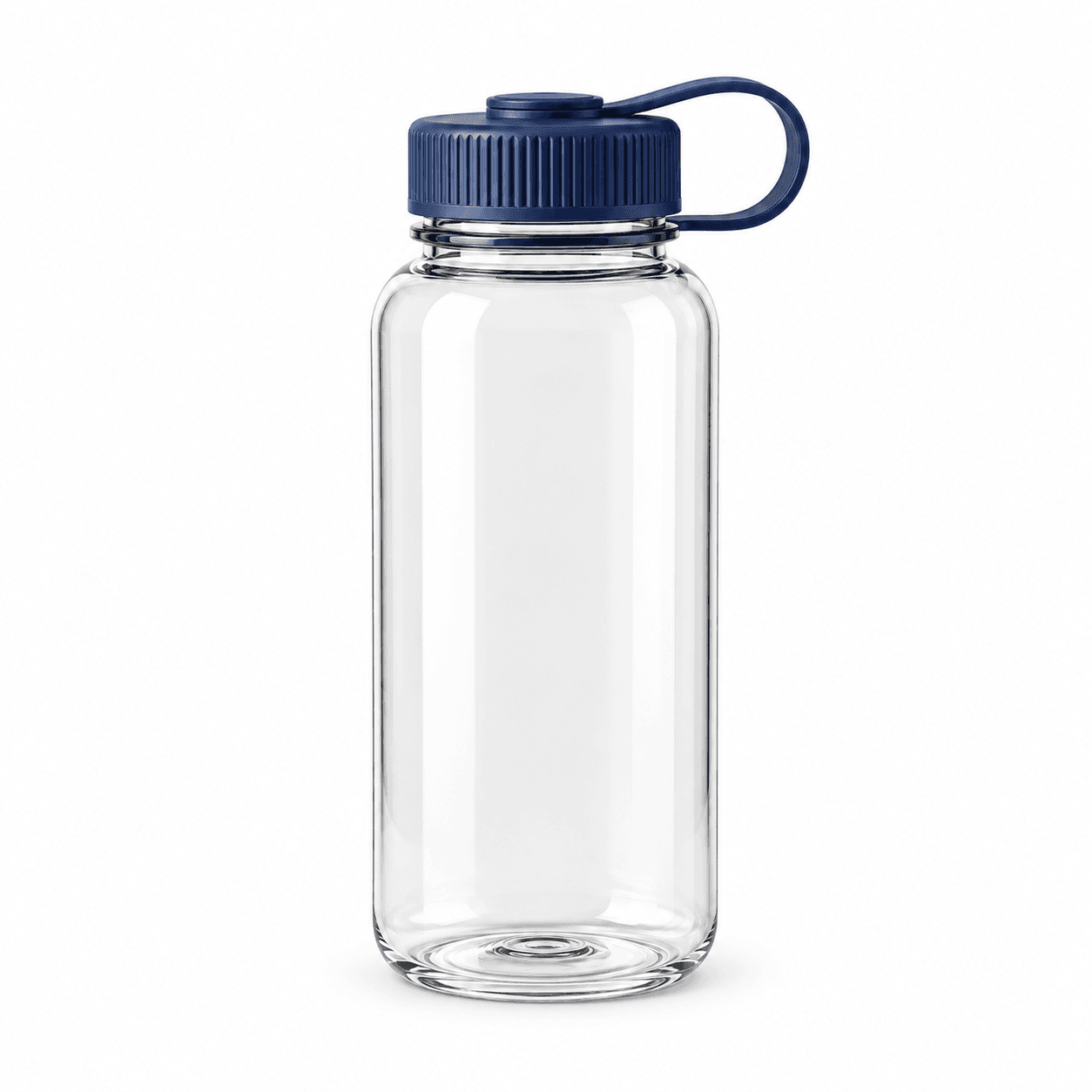
In the catalogue, the Clear sport bottle is a transparent option for team activities where you can request material options, including Tritan. It is offered by quote only: its image is illustrative and AI-generated, and the exact material, capacity, lid, food-contact suitability and permitted temperatures are confirmed in writing before production.
What are the advantages of a borosilicate glass bottle?
Borosilicate is a type of glass that tolerates sudden temperature changes better than ordinary glass. It is an inert material, so it does not usually hold on to odours or flavours, and it appeals to people who prefer drinking from glass. But it is still glass: it can break if knocked, it weighs more than the other options and it does not keep a drink's temperature by itself. A bottle being borosilicate does not mean you can assign it any usage temperature or treat it as unbreakable.
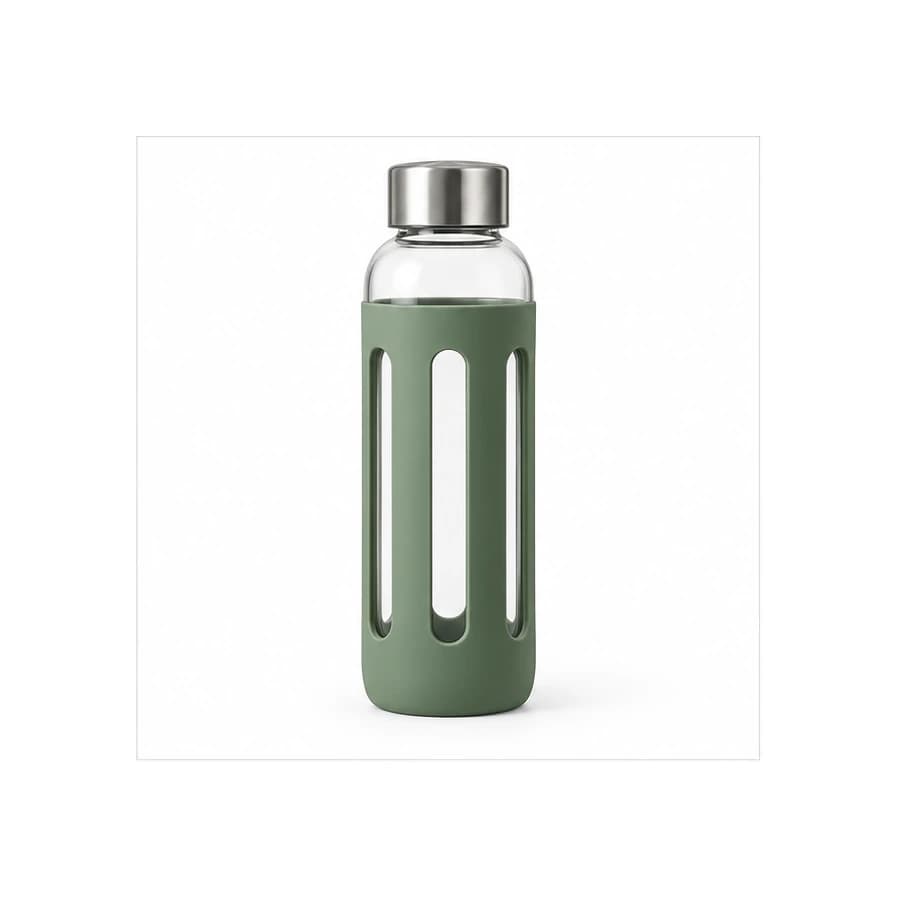
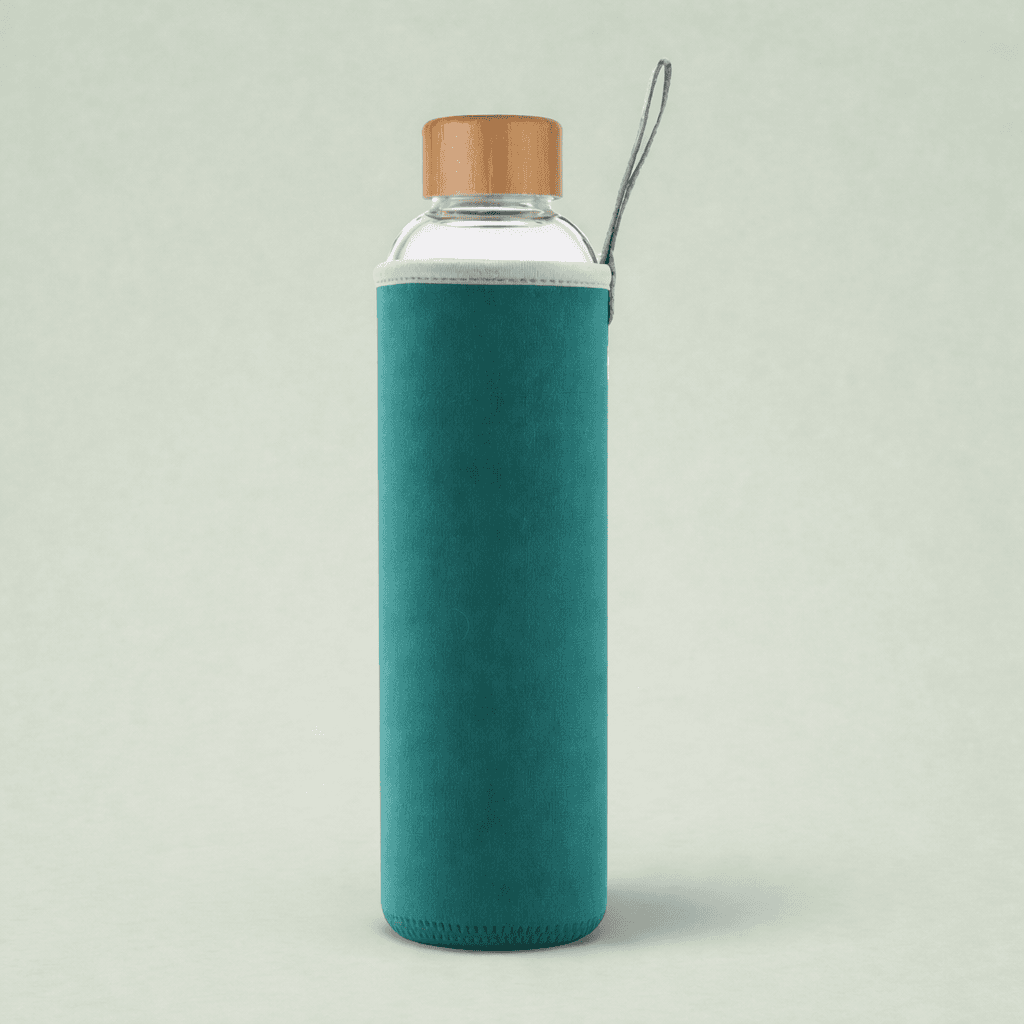
That is why the glass models in the catalogue come with a sleeve:
- Brook glass bottle: 600 ml borosilicate body, a soft-touch silicone sleeve that also serves as a branding surface, and a stainless steel lid. It is personalised by screen printing on the sleeve or engraving on the lid.
- Borosilicate glass bottle with bamboo lid: non-slip silicone sleeve and natural bamboo lid, with laser engraving, UV printing or screen printing.
Glass works better on an office desk or in a wellbeing programme than in a gym bag.
Stainless steel or aluminium bottle?
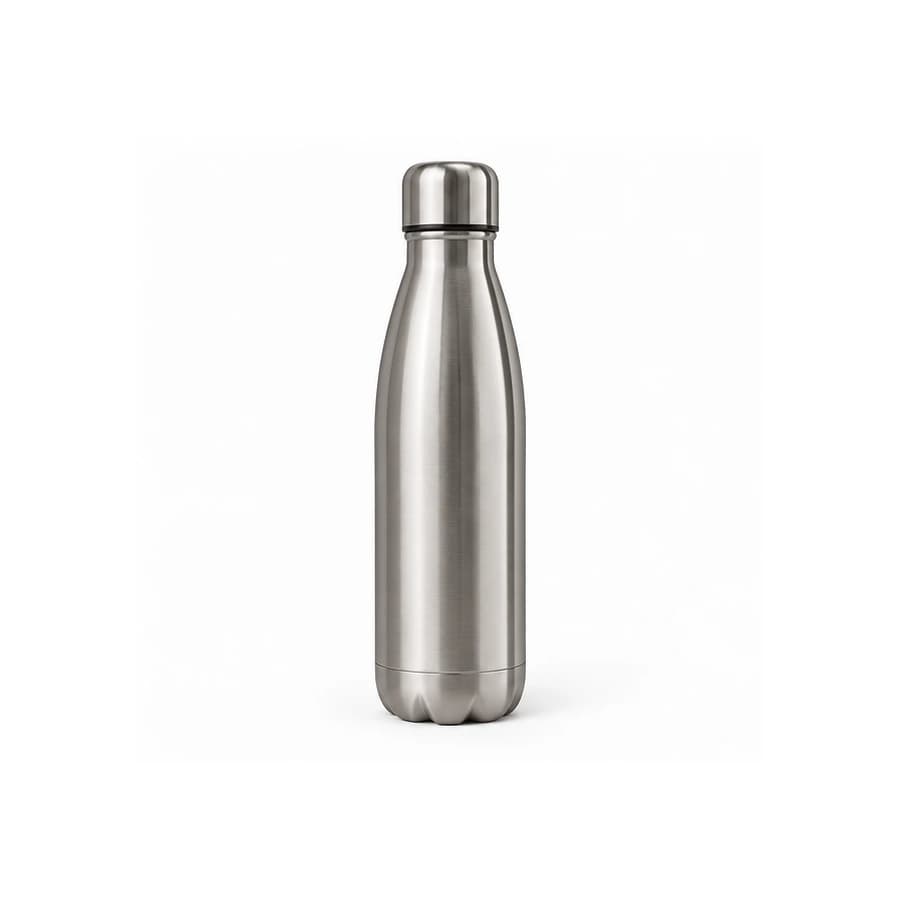
Both are metal, but they are not equivalent. Stainless steel is heavier and very tough, and it is the material of thermal bottles: a double wall with a vacuum between the two layers is what keeps the drink cold or hot. A single-walled steel bottle, by contrast, does not insulate. Do not infer hours of insulation from the outer material: check the model's data sheet.
Aluminium is lighter and is usually made with a single wall, so it does not hold the temperature. It has a lining on the inside, and it is worth asking for the data sheet for that lining and its washing instructions. The metal bottles featured in this guide are steel; if weight is the deciding factor, compare capacity and weight on each model's page.
Three steel models to compare:
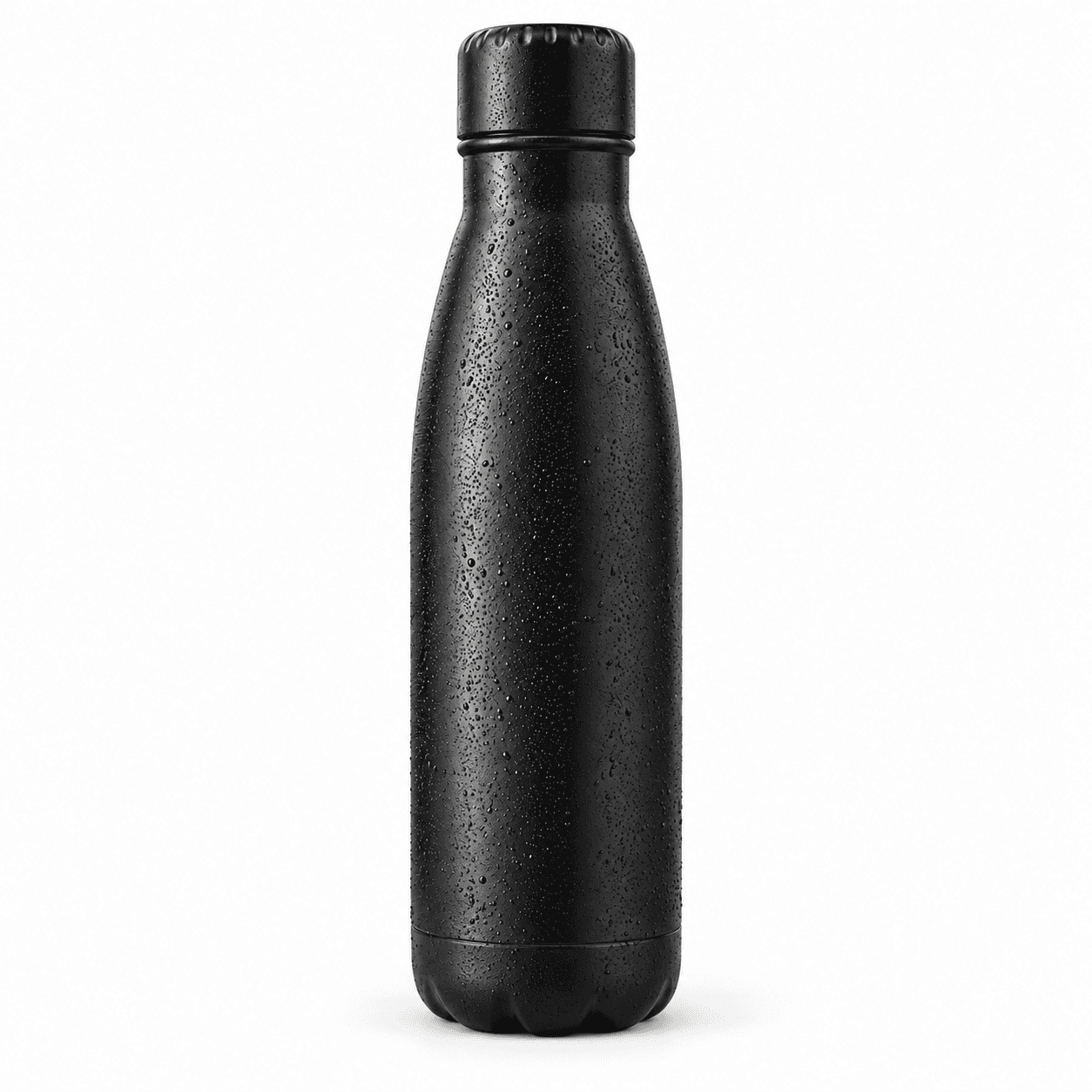
- Atlas steel bottle: 750 ml, vacuum-insulated double wall, a leak-resistant lid with a bamboo detail and a wide mouth for ice. Its powder-coated finish accepts laser engraving, as well as UV printing or screen printing.
- Hot and cold vacuum bottle: stainless steel with vacuum-insulated double wall for cold or hot drinks.
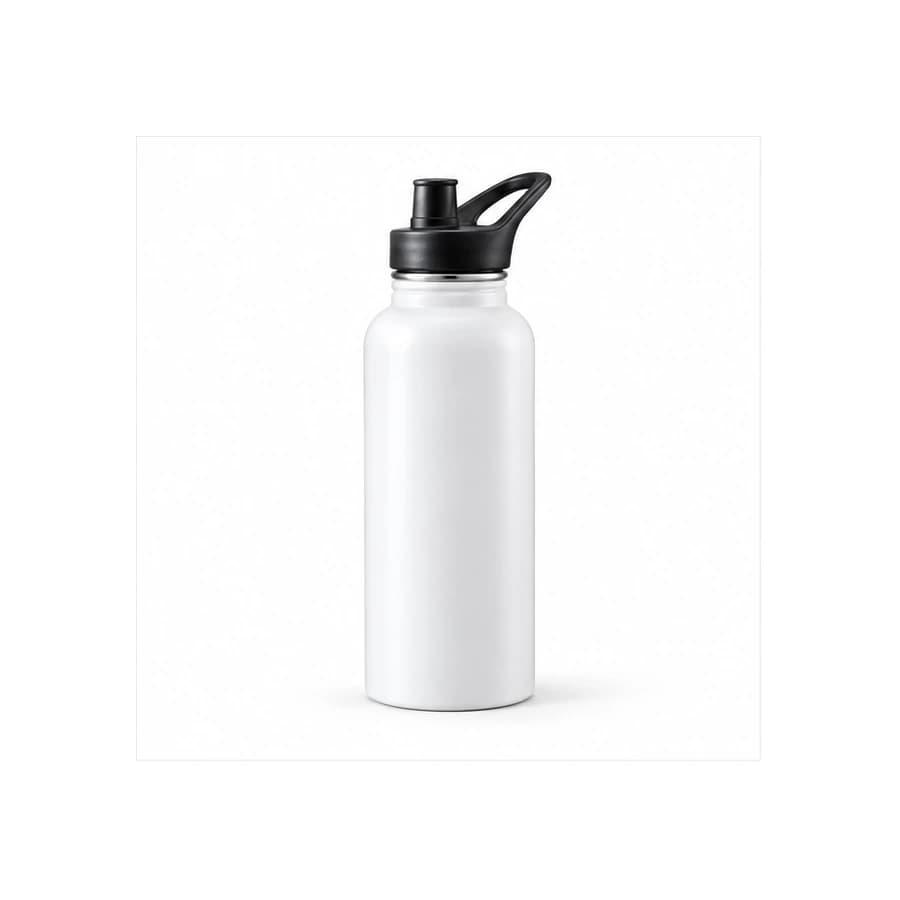
- Customisable sipper bottle: a metal bottle with a spout, designed for sport and events, with a large surface for engraving or printing your logo.
If what you want is a container for everyday coffee rather than a bottle, also compare printed mugs, which is where the thermal cups with lids are.
Why does the lid matter as much as the material?
The body of the bottle can be excellent and the lid can decide the experience. Before choosing, check:
- Seal: a lid with a drinking opening is not the same as a leakproof closure. If the bottle will travel lying down in a rucksack, ask for the closure to be specified.
- Cleaning: how many parts the lid has, whether it comes apart and whether there are seals to remove for washing.
- Lid materials: bamboo, steel or plastic need different care from the body. A claim about the raw material of the body does not by itself certify the lid, the seals or the inks.
- Opening: a wide mouth makes ice and cleaning easier; a spout is more comfortable for drinking on the move.
Which marking technique does each material take?
| Technique | Where it is used | What to bear in mind |
|---|---|---|
| Laser engraving | Steel and powder-coated finishes; metal lids | Permanent, understated mark, in a single tone |
| UV printing | Smooth steel or glass surfaces | Takes colour logos; confirm the printable area |
| Screen printing | Cylindrical bodies and silicone sleeves | Good for logos with few colours and large runs |
| To be confirmed by design | Quote-only models, such as the Clear | The technique is agreed with the final material |
In every case you receive a digital proof with your logo on the real surface, its size and position, before production. Production starts when you approve it and takes 10 to 20 working days, confirmed in the quote; if a product page states its own lead time, that one applies.
What does a custom bottle cost for a business?
The price depends on the model, the quantity and the marking technique, and minimums are set per product, not as one rule for the whole catalogue. Each product page shows an indicative "from" price for a basic configuration, before personalisation and delivery, and the minimum for that model. Treat those as a starting point: the quote gives the total for your quantity, logo and delivery.
| Model | Material | Notes |
|---|---|---|
| Clear sport bottle | Transparent, Tritan on request | Quote only; confirm material in writing |
| Brook glass bottle | Borosilicate glass with sleeve | Sleeve is the branding surface |
| Customisable sipper bottle | Metal with spout | Large surface for engraving or printing |
| Atlas steel bottle | Steel, vacuum-insulated double wall | Wide mouth, leak-resistant lid |
| Borosilicate glass bottle with bamboo lid | Borosilicate glass with sleeve | Bamboo lid, several marking options |
| Hot and cold vacuum bottle | Steel, vacuum-insulated double wall | Cold or hot drinks |
Our guide to choosing water bottles for business goes into buying by quantity, and the print on demand page covers single units on compatible products.
What to ask for before approving an order
- Material data sheet for the body, the lid and the seals, with capacity and food-contact suitability.
- Permitted temperatures and whether the bottle is insulated or single-walled.
- Washing instructions, including those for the marking.
- Digital proof with your logo at its real size and position.
- Packaging: whether it goes out alone or in a kit, in a printed kraft box or a rigid gift box.
- Estimated carbon footprint: every quote includes it per product, and certified products come with their certificate on request.
Frequently asked questions
Which reusable bottle is lightest?
By material, aluminium and Tritan are the lightest and borosilicate glass is the heaviest. A double-walled steel bottle weighs more than a single-walled one. Compare the weight stated on each model's page.
Which bottle keeps water cold longest?
A bottle with a vacuum-insulated double wall, such as the Atlas steel bottle or the hot and cold vacuum bottle. Tritan, glass and single-walled aluminium do not insulate.
Can they go in the dishwasher?
It depends on the model, the lid and the marking, not only on the material. Follow the instructions on the model's page.
What is the minimum order?
Minimums are set per product and shown on each product page. For single units, see print on demand on compatible products.
Which bottle is the most sustainable option?
The one that is used for years. Choose a tough model with a lid that can be cleaned properly and a design people want to carry. You will find more criteria on our sustainability page.
Choose your bottle
Tell us the intended use, the quantity, the delivery date and the material you prefer. Request your quote or browse the full catalogue: a specialist replies to every request with models, minimums, marking and lead times.