How to choose custom caps for your business: types, marking and mistakes
Embroidery or printing, fit, sustainable materials and the most common mistakes: everything to know before ordering custom caps for your business.
By Zintora Team
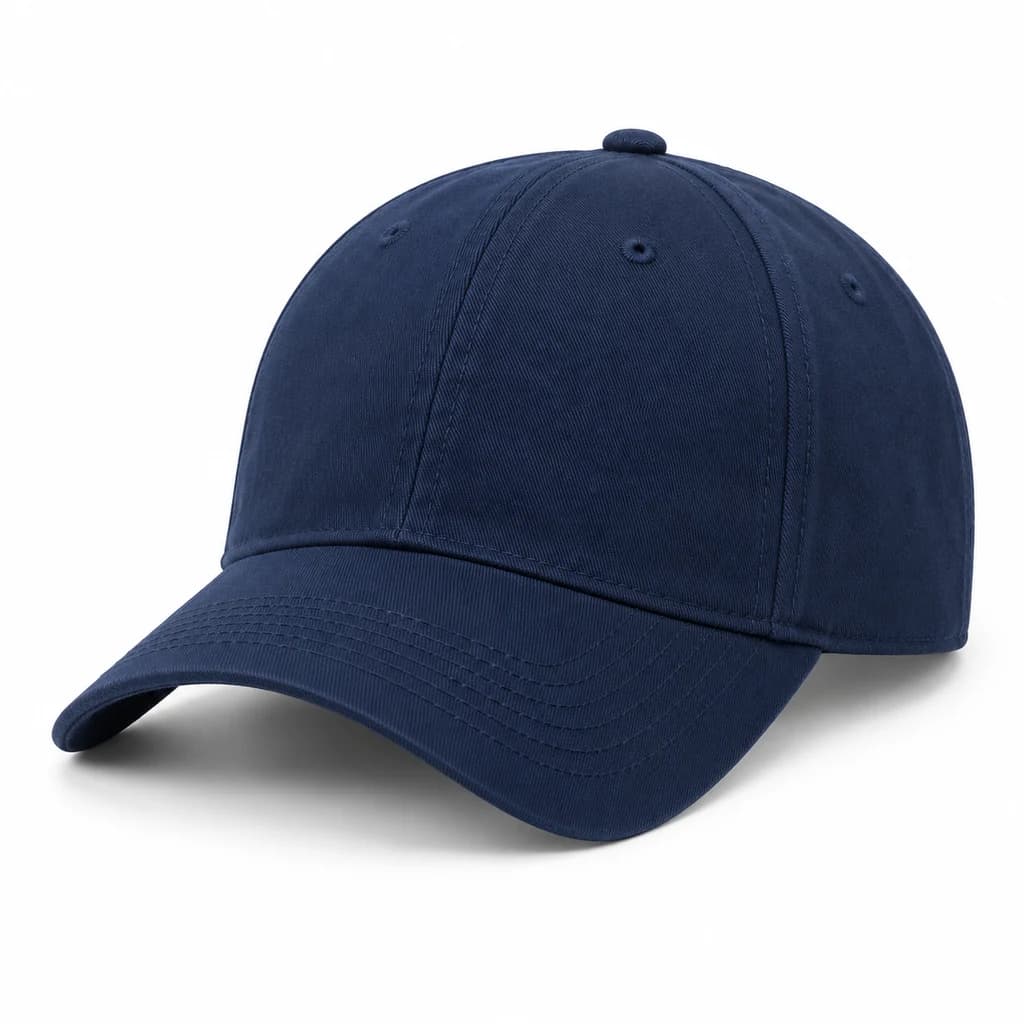
To choose custom caps for a business, decide the model first: classic baseball cap, sports cap, knitted beanie or bucket hat. Then check the marking technique each one accepts, the colour, the fastening and the minimum order stated on its product page. Approve a digital proof of the logo before production and confirm the lead time in the quote.
Why the cap is still the forgotten item in corporate merchandise
Related catalogue product: Fieldline bucket hat.
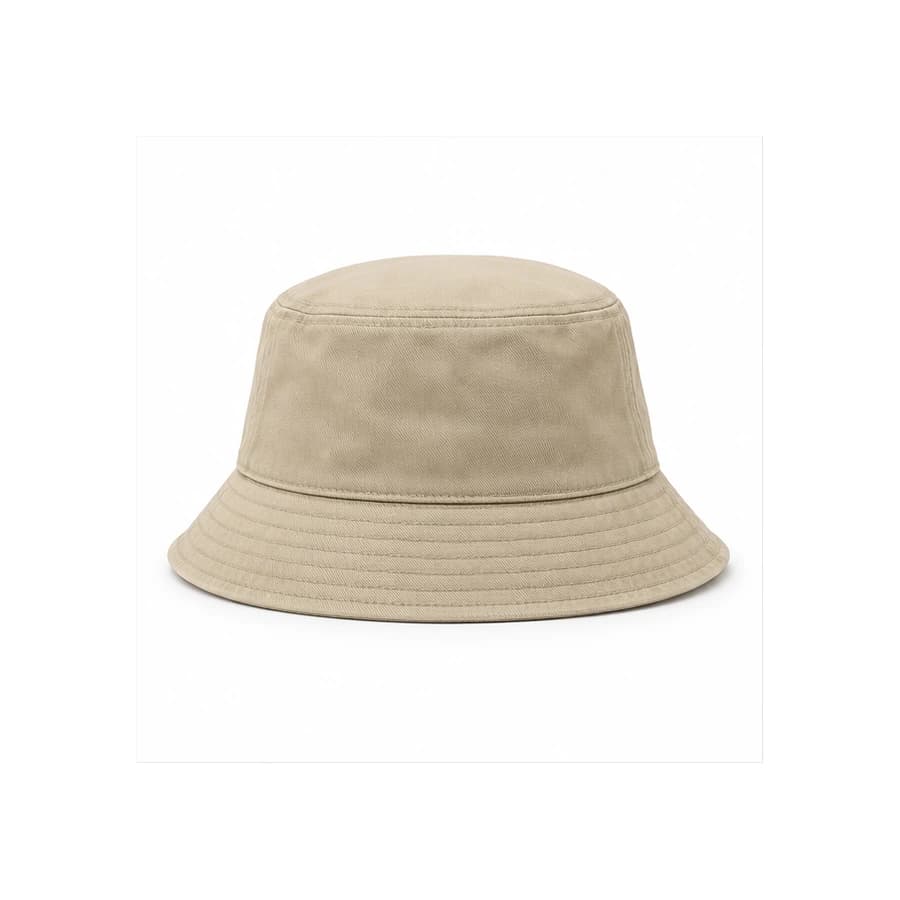
When a company thinks about corporate gifts, the T-shirt and the hoodie almost always win. The cap gets relegated to "something for the summer event", when it is in fact one of the items with the best visibility for the money spent: it is worn in the street, at the gym, in the car, for months after the event that gave it away. Unlike a T-shirt, which many people keep for wearing at home, a well-chosen cap becomes an everyday garment.
If your company is weighing up branded caps for an event, a sales team or a welcome kit, this is what really separates a cap that gets worn for months from one that ends up in a drawer the same week.
What a corporate cap needs for people to wear it
Not all custom caps are the same, and the most common mistake is to pick the cheapest model in the catalogue without looking at these four factors:
- Fit: an adjustable back fastening (hook-and-loop, buckle or snapback) suits almost any head size; a fixed fit means ordering sizes and complicates the logistics of a large order.
- Fabric: thick cotton gives a premium finish but is heavy in summer; technical polyester or lightweight nylon is better for outdoor events or sales teams who wear the cap for many hours at a stretch.
- Structure: a structured cap, with an inner reinforcement, keeps its shape and looks better in team photos; an unstructured one is more casual and comfortable as an everyday gift.
- Peak: curved or flat depending on the audience you are addressing. A flat peak communicates a more urban, younger image; a curved one is the safe option for a traditional corporate profile.
None of these factors is "better" in the abstract: they depend on who will wear the cap and in what context, so decide them before asking for a quote, not after.
Embroidery or printing: the decision clients ask about most
For caps, embroidery almost always beats printing, and it is not only a question of looks. An embroidered logo withstands washing, sun and daily use without cracking or losing colour, whereas a print on curved fabric tends to wear sooner around the front seam, precisely where the cap is bent most when it is put on and taken off. The exception is a logo with many colours or gradients: there, direct digital printing reproduces the original design better, although it has a somewhat shorter life.
Rule of thumb: if the logo has fewer than three colours and the cap needs to last more than one season, ask for embroidery. If the design is complex or it is for a short-lived promotion, printing is cheaper and quicker to produce.
When it makes sense to give custom caps
Caps work especially well in these contexts:
- Trade shows and outdoor events: they protect from the sun and are the item people pick up first at a stand, alongside branded water bottles.
- Sales and field teams: they give visible uniformity on client visits without the cost or rigidity of a full uniform.
- Company days and team building: they reinforce team identity in photos and videos that are later shared internally and on social media.
- Outdoor brand activations: sponsored runs, sports tournaments, university fairs and street events.
- Welcome kits for field or logistics roles: a practical addition inside an employee welcome pack that is not only office clothing.
Where they work worst is as the only gift for office-based staff who rarely go outdoors: there a notebook or an everyday reusable bottle usually gets better use.
What affects the final price of a custom cap
The quote for a cap order varies with several decisions that are best made before asking for a price, not after:
| Factor | How it affects the cost per unit |
|---|---|
| Order volume | The more units, the lower the unit cost; the biggest jump is usually in moving past the first quantity tier |
| Marking technique | Multi-colour embroidery usually costs more than a simple print beyond a certain stitch count |
| Fabric material | Organic cotton and recycled polyester carry a premium over standard material |
| Number of colours in the design | Each additional colour in embroidery adds machine time and therefore cost |
| Delivery time | A rush production almost always makes the order dearer than planning with several weeks of margin |
Asking for a quote with these five variables already decided avoids a back-and-forth of emails before you have a real number.
Sustainable materials: the cap that does not end up in a drawer within three months
Sustainability is no longer an optional extra in corporate merchandise: more and more procurement departments explicitly ask for organic cotton, recycled polyester or certifications such as GRS before approving an order. A cap made with recycled materials costs slightly more per unit, but it reduces the risk of the order falling outside the ESG criteria of whoever requests it internally, and in practice it is often also the cap people keep longest, because the fabric stands up better to washing. You can review the certified options on our sustainability page before deciding on the final model.
Common mistakes when ordering custom caps for your team
These are the faults that most often delay or add cost to an order:
- Ordering a single fixed-fit size for a large team without first checking the group's real sizes.
- Sending the logo in low resolution and discovering in the embroidery proof that the small details are lost.
- Not leaving time to review a physical sample before an event with a fixed, immovable date.
- Choosing a cap colour that does not contrast with the embroidery thread, leaving the logo almost invisible in photos.
- Not working out the minimum order per size and colour before budgeting the whole project internally.
Questions to settle before asking for a quote
- Who will wear the cap: the internal team, clients or the general public at an event?
- Will it be used once, or does it have to withstand a whole season of weekly use?
- Does the logo work in embroidery with few colours, or does it need the detail of digital printing?
- Is there already a corporate colour defined, or is there room to choose the one that contrasts best with the embroidery?
- What is the real deadline, including time to review a sample before approving the full production run?
Answering these five questions before writing to a supplier almost always reduces the order to a single round of quoting.
How to order your custom caps with Zintora
At Zintora we treat a cap order like the rest of our branded merchandise: each product's minimum is shown on its page, you get a clear starting price before committing to anything, and you see an embroidery or print proof before full production is launched. Standard production is 10 to 20 working days after proof approval, confirmed per order in the quote. If your event includes clothing too, take a look at our custom hoodies page; and if you want to know how to combine several items on one stand, our guide to event and trade show merchandise covers that in more detail.
Want to see real finishes and lead times before deciding? Request your custom caps quote and we will confirm quantities, fabrics and production times with no obligation, or browse the catalogue first.